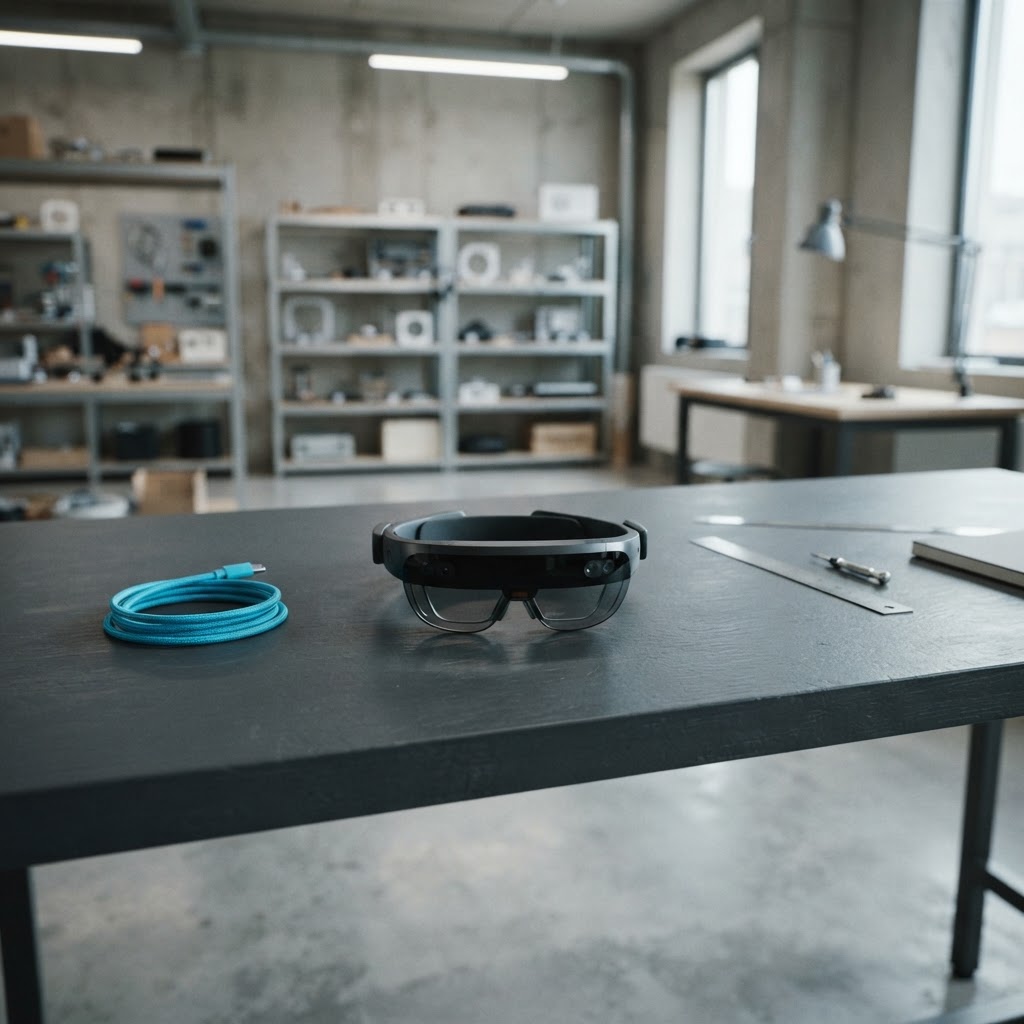
Best Wearable Tech in 2026: Which One Is Worth Buying
By Alex Mercer·

Quick Answer
The wearable tech worth buying in 2026 is the device that produces an actionable signal with minimal workflow friction, not the one with the longest feature list. For most professionals, that means a health-focused wearable for personal trend tracking or smart glasses and hearables when hands-free information genuinely changes the job.
Introduction
Wearable technology now covers continuous biometrics, ambient computing, translation, and field-ready interfaces, but the category remains uneven. Buy only when the device replaces a repeated phone interaction, creates a reliable longitudinal data set, or solves a safety problem that a phone cannot. Global wearable shipments grew 4.3% year over year in the first quarter of 2026, according to IDC, yet adoption still fails when charging, comfort, and unclear data ownership become daily annoyances. The purchase decision is less about novelty than whether the sensor, software, and routine hold up after the first month.
Key Takeaways:
Choose wearables that create a repeatable signal you can use.
Health metrics are trend inputs, not standalone clinical conclusions.
Enterprise deployments require privacy controls before device rollout.
How to decide on wearable tech by job, not form factor
The useful split is between passive measurement and active assistance. Rings, watches, and sensor bands collect data with little interruption, while glasses and hearables surface information during work. Wearables have broad health monitoring applications, but broad capability is not the same as a credible use case.
Start with the operational question
Before comparing models, define the decision the device must improve: recovery planning, incident response, navigation, note capture, accessibility, or hands-free communication. This prevents buying a polished dashboard that produces no behavior change, a risk highlighted by the practical reality that a device with no place in an established routine is unlikely to be worn consistently.
Signal: Pick one metric tied to a real decision.
Comfort: Continuous use matters more than extra sensors.
Charging: Missed charging breaks longitudinal data.
Export: Check whether raw and historical data remain accessible.
Privacy: Separate personal wellness data from employer systems.
Health wearables need a higher evidence bar
Consumer health devices are most useful for baselines, deviations, and habit feedback, not diagnosis. A purchase of wearable health technology earns its place when passive collection captures information a phone would miss, such as overnight patterns or activity context, and when the companion software explains uncertainty rather than disguising it.
Consumer wellness and medical-device claims can face different regulatory treatment, even as the line between those categories becomes harder to define. That distinction matters when interpreting wearable health monitoring claims: alerts deserve follow-up, not automatic medical conclusions.

Wearables for work and personal tracking
Wearables become valuable at work when they reduce interaction cost without creating another data silo. Watches and rings fit passive personal tracking; earwear and glasses fit brief, context-sensitive assistance. The latter categories are growing quickly because they can move computing closer to the moment of action.
Compare categories by integration burden
The right device category depends on what must happen without reaching for a phone. IDC projects 407.6 million hearable shipments in 2026, up 4.0% year over year, supported by AI assistant features, real-time translation, and biometric monitoring. Smart glasses are forecast to reach 13.6 million units, up 41.4% year over year, which makes them a category to monitor rather than an automatic procurement default.
This comparison isolates the constraints that determine whether a wearable becomes durable equipment or drawer inventory.
Category | Primary workflow | Core trade-off | Buying test |
|---|---|---|---|
Smart ring | Passive sleep and recovery trends | Limited display interaction | Wear it overnight consistently |
Smartwatch | Activity, alerts, and quick controls | More interruptions and charging discipline | Notifications must save time |
Hearables | Calls, translation, and voice assistance | Audio comfort and battery constraints | Hands-free access changes a routine |
Smart glasses | Contextual visual information | Privacy and social acceptance | Field work needs visual guidance |
Source data verified as of October 1, 2026.
Rings and watches have narrow, familiar roles in personal tracking. IDC projects smart rings will reach 6.3 million units in 2026, up 26.8% year over year. Glasses and hearables warrant a pilot with real tasks, especially where recording, transcription, or visual prompts may expose sensitive information.
AI features should explain, not merely predict
AI-driven wearable health insights can help organize trends, detect changes, and personalize prompts, but the model is only as useful as the data quality and explanation behind it. Ask whether the device clarifies why a result changed, lets users review inputs, and keeps high-stakes decisions with qualified professionals. An AI health coach can support reflection, but it should not be treated as a clinician.
For founders evaluating product architecture, on-device AI processing is relevant because it can limit data transfer and reduce response delays, though it does not eliminate the need for clear retention and access policies.
Enterprise wearable solutions require governance first
Enterprise wearable solutions should start with a narrow workflow and a written data boundary. A warehouse alerting pilot, remote-assistance program, or workplace safety deployment can justify specialized hardware, but only if managers define who sees sensor data, how long it remains available, and what decisions it may influence.
Security and workforce trust are deployment requirements
Wearable health sensors for workplace safety can identify fatigue-related or environmental signals, but workers need plain-language notice and a meaningful choice where possible. Research on AI sensor systems identifies privacy, governance, and traceability risks from raw collection through analysis, making data governance standards a product requirement rather than a legal afterthought.
TechBriefed tracks this boundary because product teams often treat a wearable rollout as a hardware decision when it is actually a policy, integration, and human-factors project. A practical evaluation should include security review, device management, consent language, accessibility, and an exit path for collected data.
Price-to-value is a retention calculation
Do not buy a wearable because it has a low entry price or an impressive sensor count. Value comes from useful wear days, software continuity, integration with existing tools, and whether the recurring service remains necessary after the novelty fades. Biological age testing may be interesting as a consumer interpretation layer, for example, but it should not outrank direct changes in sleep, activity, or health behavior.
Conclusion
Buy a ring or watch when passive trends will guide a specific personal routine, and consider hearables or glasses only after identifying a hands-free work task they improve. Treat health outputs as contextual signals, demand clear privacy terms, and pilot enterprise devices before scaling them. For decision-makers seeking concise analysis of product shifts rather than launch-day noise, TechBriefed tracks how wearable categories translate into durable workflows. The future of wearable technology will be shaped less by sensor novelty than by trust, retention, and integration.
For focused technology analysis on the next hardware shift, read TechBriefed.
Frequently Asked Questions (FAQs)
What are the latest wearable tech trends for professionals?
The latest wearable tech trends for professionals center on passive biometrics, AI-assisted interpretation, real-time translation in hearables, and smart-glasses interfaces, with adoption depending on whether these functions reduce repeated work rather than simply add notifications.
What is the future of wearable tech in consumer electronics?
The future of wearable tech in consumer electronics is more ambient and specialized, as devices move from general-purpose displays toward sensors and interfaces that collect context continuously while leaving phones responsible for deeper configuration and complex tasks. IDC forecasts continued growth in major wearable categories through 2026, including hearables, smart glasses, and smart rings.
Is wearable technology a reliable indicator of health metrics?
Wearable technology is a useful indicator of health metrics when it shows a consistent personal trend, but it is not a standalone diagnostic tool because sensor accuracy, fit, algorithms, and the user’s context can all change the result.
How does artificial intelligence enhance wearable sensor accuracy?
Artificial intelligence enhances wearable sensor accuracy by cleaning noisy inputs, recognizing patterns across repeated measurements, and tailoring interpretations to individual baselines, although transparent model behavior remains necessary when outputs influence health-related decisions.
What technical standards govern wearable device connectivity?
Wearable device connectivity is governed by the wireless protocols, operating-system permissions, device-management requirements, and security practices selected by each product ecosystem, so buyers should verify compatibility and administrative controls before deployment.
What are the security risks of wearable technology in the workplace?
The security risks of wearable technology in the workplace include unauthorized access to sensitive sensor data, unclear retention practices, re-identification from combined data sets, and surveillance concerns when employers do not define purpose, access, and deletion rules.
About the Author
Alex Mercer is a Senior Tech Writer who analyzes consumer electronics, AI products, and emerging technology for practical business relevance. His work breaks complex product claims into clear trade-offs for founders, engineers, and technology decision-makers.