AI Health Coach vs Doctor: Which Should You Trust in 2026?
By Riley Cho·

Quick Answer
Trust an AI health coach for habit support, trend tracking, and low-risk wellness guidance. Trust a licensed doctor for diagnosis, treatment choices, new or worsening symptoms, and any decision where context, examination, and accountability matter.
Introduction
The practical answer to the AI health coach vs doctor question is not either-or: AI can extend attention between appointments, but it cannot assume clinical responsibility. In AI in healthcare, the useful boundary is whether a tool is organizing data and prompting behavior or interpreting illness and directing care. Founders and product teams should treat that boundary as product architecture, not a disclaimer buried in settings. A reassuring chatbot response can still delay escalation when the underlying signal is wrong.
Key Takeaways:
AI coaches are strongest when they turn routine data into timely, low-risk nudges.
Doctors remain essential when symptoms require diagnosis, examination, or accountable treatment decisions.
Health products need clear escalation paths, privacy controls, and evidence matched to their claims.
Where AI Health Coaches Add Practical Value
AI health coaches work best as an operating layer around everyday behavior. They can collect wearable data, ask structured check-in questions, spot deviations from a personal baseline, and make the next healthy action easier to take. That is valuable because primary care is episodic while sleep, activity, nutrition, and medication routines are continuous.
Continuous data can make adherence less fragile
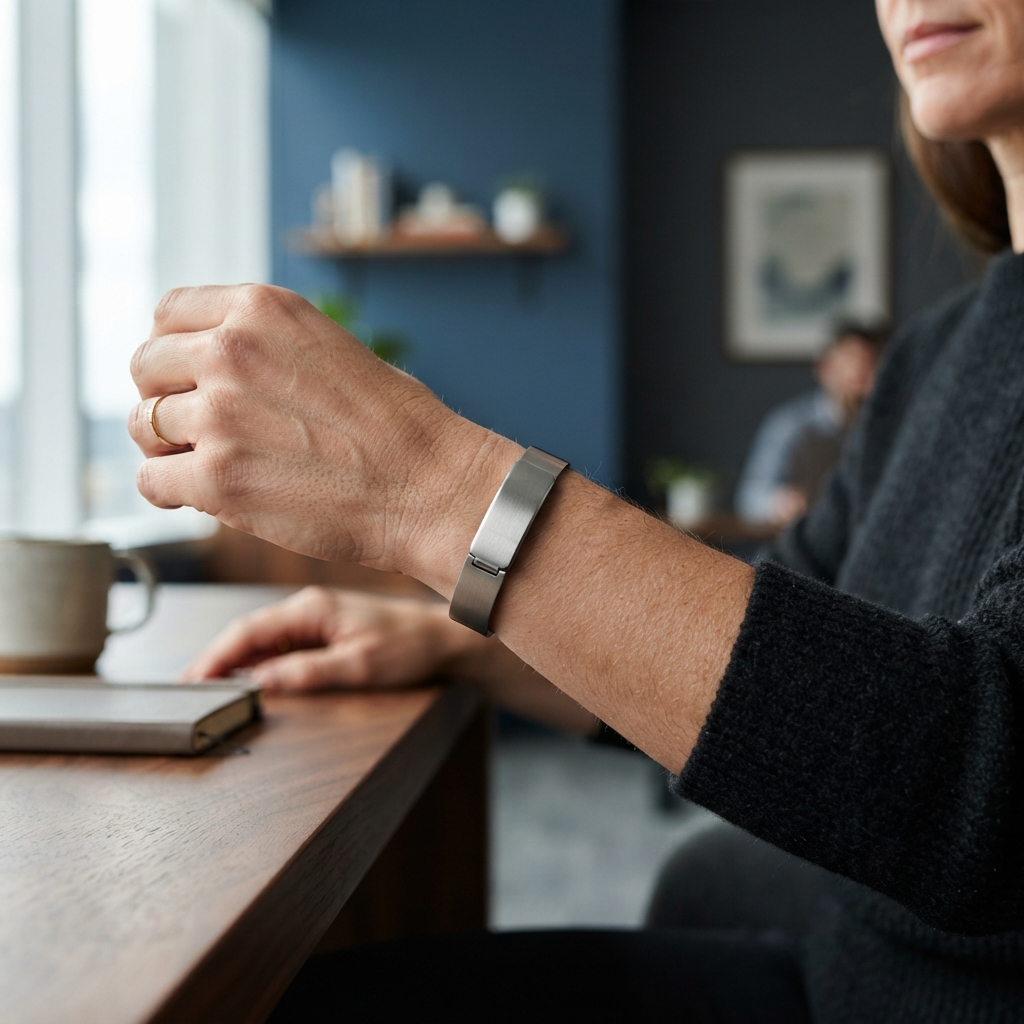
An AI coach can translate a stream of imperfect signals into prompts that fit a user's routine, rather than waiting for a clinic visit to surface a pattern. The value is not autonomous care; it is reducing the gap between noticing a change and deciding whether it deserves attention. Objective inputs anchor that judgment, which is why many people pair continuous device data with periodic physician-reviewed biomarker panels that measure what a wrist sensor can only estimate.
Availability: Check-ins and reminders can be available outside normal appointment windows.
Pattern detection: Longitudinal data can reveal changes that a single self-report may miss.
Personalization: Prompts can adapt to stated goals, schedules, and prior engagement.
Documentation: A concise symptom or behavior history can make a clinician conversation more productive.
Monitoring is useful, but it is not interpretation
The accuracy of AI health monitors depends on sensor quality, data completeness, model design, and the population used for validation. Remote-monitoring systems can support continuous tracking of vital signs and cardiovascular signals, but remote patient monitoring does not turn a consumer device into a diagnostic authority. A well-designed product should state what it measures, what it infers, and when it tells the user to seek clinical review. That standard is what separates inferred signals from measured ones: at-home biomarker test accuracy rests on accredited laboratory processing and licensed physician review, not on-device inference.
Why Clinical Judgment Still Has the Decisive Role
A physician does more than match symptoms to a database. Clinical work requires examination, differential diagnosis, knowledge of a patient's history and preferences, interpretation of uncertainty, and responsibility for what happens next. Those are the hard limitations of medical AI, especially when symptoms are incomplete, ambiguous, or high stakes.
Diagnosis requires context, not just plausible text
AI medical diagnosis can generate useful hypotheses, summarize records, or highlight information for review, but a plausible answer is not evidence that the answer is correct. Medical diagnosis software vs human expertise is a misleading framing when the software has no access to physical findings, missing records, family dynamics, or the subtle changes a clinician recognizes in conversation.
Bias also survives automation. An AI system can amplify errors in its training data, overreact to noisy inputs, or present uncertain output with undeserved confidence; research on chest pain triage illustrates why clinician-AI interaction deserves scrutiny rather than blind delegation.
Compare the tools by the decision they are allowed to make
The central tradeoff is simple: AI offers persistence and scale, while clinicians offer accountable judgment under uncertainty. Use the following comparison to decide which role fits the problem, rather than asking whether artificial intelligence vs human physician capability has a universal winner.
Decision area | AI health coach | Licensed doctor | Best use |
|---|---|---|---|
Daily habits | Reminders and adaptive check-ins | Broad lifestyle guidance | AI-led support |
Wearable trends | Tracks baseline changes | Interprets clinical significance | Shared workflow |
New symptoms | Can collect structured details | Assesses urgency and causes | Doctor-led care |
Medication changes | May support adherence | Prescribes and manages risk | Doctor-led care |
Complex conditions | Can organize information | Coordinates diagnosis and treatment | Doctor-led care |
The defensible model is augmentation: let AI improve preparation, continuity, and follow-through, then route consequential decisions to an accountable professional. That is also the practical meaning of integrating AI into clinical practice.
What Product Builders and Buyers Should Demand
Health AI earns trust through narrow claims, visible uncertainty, and reliable handoffs, not a polished conversational interface. TechBriefed readers evaluating a tool should inspect its evidence, privacy posture, clinical oversight, and escalation design before treating its output as useful health guidance.
Build escalation into the default experience
A safe coach distinguishes wellness coaching from medical care in the moment a user needs that distinction. It should capture relevant symptoms, avoid inventing certainty, preserve a shareable record for care teams, and direct users toward urgent or routine clinical support when its confidence is limited. The difference between AI agents versus chatbots matters here: a system that takes actions or coordinates workflows requires stronger controls than a conversational layer that only explains information.
Product leaders should also study AI regulation landscape requirements before shipping claims that imply detection, diagnosis, or treatment. In the United States, AI healthcare regulation in the United States is not a single product checklist; obligations vary with the tool’s intended use, data handling, and how directly it influences clinical decisions.
Governance is a commercial requirement, not a compliance afterthought
Hospital and enterprise buyers will ask who validated the model, how updates are monitored, what happens when it fails, and whether humans can override it. The broader medical diagnostics framework remains shaped by benefits and risks that cannot be solved by interface design alone. Teams planning cross-border distribution should factor in EU AI Act compliance early, because evidence, documentation, and risk-management choices are difficult to bolt on after launch.
For decision-makers, the better procurement question is not whether a vendor “uses AI,” but which workflow it improves and what failure it could introduce. Following AI enforcement trends can help teams separate durable operating requirements from feature-market noise.

Conclusion
AI health coaching is credible when it helps people notice patterns, sustain routines, and arrive better prepared for care. It is not credible as a substitute for a doctor’s diagnostic judgment, physical assessment, or duty to manage risk. The strongest products make that division obvious through constrained claims and thoughtful escalation. Follow TechBriefed for concise analysis of the technology and policy choices shaping health AI.
Frequently Asked Questions (FAQs)
Can AI replace doctors for basic diagnosis?
AI cannot replace doctors for basic diagnosis because even apparently simple symptoms can require examination, medical history, testing, and an accountable decision about urgency or treatment.
How does AI health coaching work?
AI health coaching works by combining user-reported goals, routine check-ins, and sometimes device data to generate reminders, summaries, and behavior suggestions tailored to recent patterns.
Is AI reliable for medical advice?
AI is not reliably sufficient for medical advice when the guidance could affect diagnosis, medication, or urgent care, because outputs can be incomplete, biased, or confidently wrong.
How accurate is AI compared to a physician?
AI accuracy compared to a physician varies by task and validation setting, while a physician can combine tools, examination findings, patient context, and responsibility for the final clinical decision.
What are the limitations of medical artificial intelligence?
The limitations of medical artificial intelligence include dependence on training data, weak handling of missing context, inconsistent performance across populations, and no independent responsibility for patient outcomes.
Will AI change the role of general practitioners?
AI will change the role of general practitioners by reducing administrative burden and improving information triage, while leaving clinicians responsible for relationship-based judgment, diagnosis, and care coordination.
About the Author
Riley Cho is a content strategist focused on translating complex technology shifts into practical decisions for builders and business leaders. Their work takes a skeptical, hands-on view of products that promise automation in high-consequence settings.