How NPUs Power On-Device AI: A Beginner's Guide
Learn how NPUs power on-device AI, from smartphones to laptops, in this beginner's guide to neural processing units and edge computing.
By Sable Wren · 7 min read ·
Quick Answer#
An NPU, or Neural Processing Unit, is a specialized chip designed to run neural network computations directly on a device, without sending data to the cloud. It handles the matrix math behind AI tasks far more efficiently than a CPU or GPU, which is why it now powers features like real-time translation, photo enhancement, and local LLM inference on modern laptops and phones.

Introduction#
On-device AI has shifted from a marketing bullet point to a genuine architectural decision, and NPUs sit at the center of that shift. A neural processing unit is purpose-built to accelerate the linear algebra behind neural networks, running billions of low-precision operations per second while sipping a fraction of the power a GPU would draw. That efficiency is what makes local inference practical on a laptop battery or a phone chassis. For professionals evaluating hardware in 2026, the difference between a chip with a capable NPU and one without now shapes which AI workloads can run privately, offline, and in real time. Understanding how these accelerators actually work is the difference between reading a spec sheet and knowing what it means for your product roadmap.
Key Takeaways:
An NPU is a dedicated AI accelerator chip that runs neural network math with far greater power efficiency than a CPU or GPU.
NPUs enable on-device AI features such as local LLM inference, camera processing, and real-time translation without cloud dependency.
By 2026, NPU performance measured in TOPS has become a primary spec for evaluating AI-capable laptops and smartphones.
What an NPU Actually Is#
A neural processing unit is a domain-specific accelerator built to execute the operations that dominate modern machine learning workloads: matrix multiplication, convolution, and activation functions. Rather than acting as a general-purpose processor, an NPU is optimized for the narrow but demanding computational pattern that neural networks require, which is why it can outperform a CPU by orders of magnitude on the same task while drawing significantly less power.
How NPUs Work Under the Hood#
At a hardware level, an NPU is essentially a dense grid of multiply-accumulate units arranged to feed data through a neural network layer by layer. The design leans on parallelism, low-precision arithmetic, and tight on-chip memory to keep data close to the compute units. For a deeper technical view of the architecture, the neural processing unit definition covers the accelerator category in full.
Matrix engines: Systolic arrays or tensor cores that run thousands of multiply-accumulate operations per cycle.
Low-precision math: Native support for INT8, INT4, and FP16 formats, which shrinks memory bandwidth needs and boosts throughput.
On-chip SRAM: Local memory that holds weights and activations to avoid slow trips to system RAM.
Dataflow scheduling: Hardware pipelines that stream tensors between layers without CPU intervention.
Sparsity acceleration: Skips zero-value weights to cut computation on modern pruned models.
NPU vs CPU vs GPU#
The clearest way to understand an NPU is to place it beside the two processors it complements. A CPU handles sequential logic and branching, a GPU handles massively parallel floating-point work, and an NPU handles the specific matrix arithmetic patterns of neural networks with minimal overhead. Research on mobile inference architectures highlights how NPU designs lean heavily on SIMD design patterns to maximize throughput per watt during on-device machine learning tasks.
Processor | Primary Strength | AI Workload Fit | Power Efficiency |
|---|---|---|---|
CPU | Sequential logic, control flow | Small models, preprocessing | Moderate |
GPU | Parallel floating-point compute | Training, large-model inference | Low per watt for AI |
NPU | Fixed-function matrix math | Sustained on-device inference | High, often 5-10x a GPU |
The takeaway is that GPUs remain dominant for training and heavyweight cloud inference, but for sustained AI workloads on battery-powered hardware, an NPU delivers the throughput per watt that neither of the other two can match. This is why chipmakers now treat the NPU as a first-class citizen alongside the CPU and GPU, and it aligns with broader edge computing fundamentals that push computation closer to the user.
Why NPUs Matter for On-Device AI#
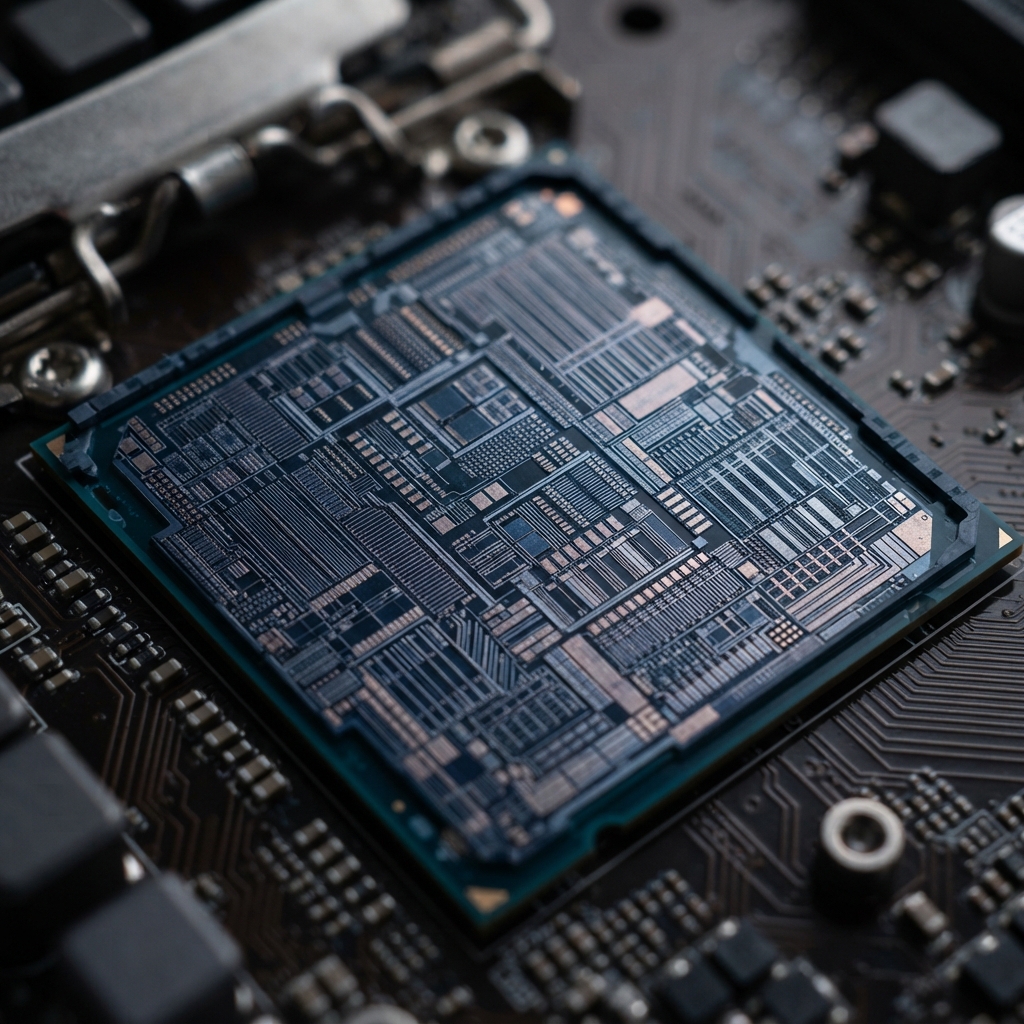
The rise of the NPU is tied directly to a shift in where AI inference happens. When features like transcription, image editing, and small language model inference run locally, latency drops, privacy improves, and cloud costs disappear, but only if the hardware can sustain the workload without draining the battery. That is the problem an AI chip like an NPU solves.
Comparing Leading NPU Implementations#
The market for edge AI hardware has consolidated around a handful of designs, each optimized for a slightly different envelope of performance and power. Understanding the differences helps when evaluating devices for procurement or product integration. TechBriefed tracks these architectures closely because the gap between a 10 TOPS mobile NPU and a 50 TOPS laptop-class NPU changes which models a device can realistically run.
NPU | Device Class | Peak Performance (approx) | Typical Use Case |
|---|---|---|---|
Apple Neural Engine (M4/A18) | Mac, iPhone, iPad | 38 TOPS | Photo processing, on-device LLMs |
Qualcomm Hexagon (Snapdragon X Elite) | Windows laptops, Android | 45 TOPS | Copilot+ features, mobile AI |
Intel AI Boost (Lunar Lake / Panther Lake) | Windows laptops | 48 TOPS | Windows AI stack, local inference |
AMD XDNA 2 (Ryzen AI 300) | Windows laptops | 50 TOPS | Creator workloads, LLMs |
The comparison shows why the Qualcomm NPU vs Apple Neural Engine debate is more nuanced than raw TOPS numbers suggest. Software stacks, memory bandwidth, and model quantization support often matter more than headline throughput, which is worth remembering when comparing the best laptops with NPU 2026 spec sheets.
Power Efficiency and Privacy Benefits#
NPU power efficiency is the reason on-device AI is viable at all on a phone or thin laptop. Research from Penn Engineering on matrix arithmetic acceleration shows that dedicated hardware can cut the energy per inference by an order of magnitude compared to running the same workload on a general-purpose core. That efficiency compounds with the privacy advantage of keeping user data on the device, since on-device AI processing removes the need to transmit sensitive inputs to a remote server.

Conclusion#
NPUs have moved from a niche mobile accelerator to a defining component of modern computing hardware, and the shift is not slowing down. For decision-makers, the practical implication is that AI workload placement is now a hardware question as much as a software one, and TOPS ratings, quantization support, and memory architecture all deserve scrutiny before a procurement or product decision. The devices that will handle serious local inference over the next few years are the ones where the NPU, CPU, GPU, and memory subsystem are designed to work together. Treat the NPU spec as a leading indicator of how future-proof a device really is.
Want sharper analysis on the hardware shaping on-device AI? Subscribe to TechBriefed for daily intelligence on the chips, tools, and companies defining the next wave of computing.
Frequently Asked Questions (FAQs)#
What is an NPU in a laptop?#
An NPU in a laptop is a dedicated AI accelerator chip that runs neural network computations locally, enabling features like background blur, live captions, and small language model inference without cloud access.
How does an NPU differ from a GPU?#
An NPU is purpose-built for low-precision matrix math used in neural network inference, while a GPU is a general parallel processor designed for high-precision floating-point work like graphics rendering and model training.
Why do phones need NPUs?#
Phones need NPUs to run features like computational photography, voice recognition, and on-device translation quickly and privately without draining the battery or requiring a network connection.
Is an NPU better than a GPU for AI?#
An NPU is better than a GPU for sustained on-device inference workloads because it delivers far higher performance per watt, though GPUs remain superior for training and large-model cloud inference.
How much RAM does on-device AI need with an NPU?#
Most on-device AI workloads on an NPU-equipped laptop benefit from at least 16 GB of unified or fast system memory, with 32 GB recommended for running local large language models comfortably, as covered in our RAM requirements for LLMs guide.
Do I need an NPU for AI tasks?#
You do not strictly need an NPU for occasional AI use, but for sustained local inference, privacy-sensitive workloads, or battery-powered scenarios, an NPU meaningfully changes what is practical, as explained in our breakdown on whether you need an NPU.
How do NPUs improve battery life on devices?#
NPUs improve battery life by executing AI workloads at a fraction of the energy a CPU or GPU would consume for the same task, which is critical for sustained features like always-on transcription or camera processing, as detailed in our NPU basics explained guide.
About the author

 What Is an NPU and Do You Really Need One?
 How Much Does an MVP Cost in 2026? Real Founder Numbers
 What Should an MVP Budget Look Like in 2026?
 What is the best AI model for coding in 2026