What Is an NPU and Do You Really Need One?
NPUs are now in every flagship chip, but what do they actually do? We break down NPU vs GPU, real use cases, and whether you truly need one.
By Riley Cho · 8 min read ·
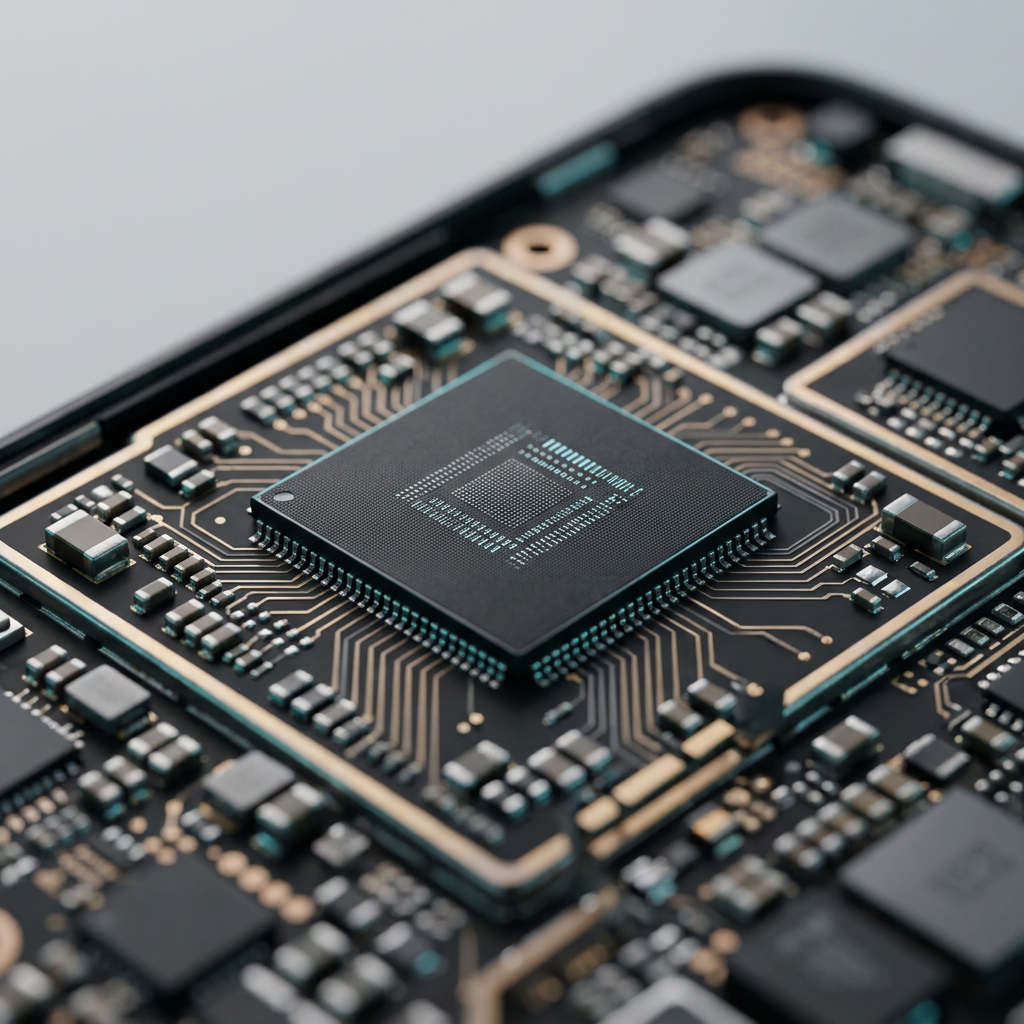
Quick Answer: An NPU (neural processing unit) is a chip dedicated to running AI inference tasks, such as image recognition, voice processing, and background blur directly on your device, with far less power than a CPU or GPU. In 2026, every major flagship phone and laptop will ship with an NPU. For most users, it is a useful inclusion that will matter more as software catches up, not a feature worth paying a premium to prioritize today. For developers running local AI models or power users relying on Copilot+ features, it is already measurable.
Introduction#
An NPU, or neural processing unit, is a dedicated chip designed to handle AI tasks like image recognition, voice processing, and machine learning inference directly on your device. Every major chipmaker, from Qualcomm and Apple to Intel and AMD, now ships NPU hardware in flagship products, yet the practical value of these processors remains genuinely unclear for most buyers. The marketing promises are loud: smarter cameras, real-time translation, background noise removal. But the gap between what NPU silicon can theoretically do and what it actually does in daily workflows is wider than most spec sheets suggest.
Key Takeaway:
NPUs handle on-device AI inference, image recognition, voice, and background effects using a fraction of the power a GPU would require for the same task.
Microsoft's Copilot+ PC requires a minimum of 40 TOPS from the NPU, making it a real purchase consideration for Windows laptop buyers in 2026.
For most users, the NPU in a new device will sit largely idle until software ecosystems catch up to the silicon.
For developers running local inference models or power users relying on Windows Studio Effects, the efficiency gain is already measurable.
How NPUs Work and Why They Exist#
To understand why the industry added yet another processor type, you need to look at what CPUs and GPUs were never designed to do efficiently. AI workloads, particularly neural network inference, rely heavily on matrix multiplication, a type of math that benefits enormously from purpose-built silicon rather than general-purpose edge computing hardware.
The Architecture Behind NPU Chips#
An NPU (neural processing unit) strips away the general-purpose circuitry found in CPUs and instead packs in specialized multiply-accumulate (MAC) arrays optimized for tensor operations. This architectural choice means the chip can process neural network layers with far less power draw and latency than a CPU or GPU performing the same task.
Dedicated MAC arrays: Handle the matrix math central to neural network inference at high throughput
Low-power design: Operate at a fraction of the wattage a GPU requires for equivalent AI tasks
On-chip memory: Reduce the bottleneck of shuttling data back and forth to system RAM
Fixed-function pipelines: Trade flexibility for speed on a narrow set of well-defined operations
NPU vs CPU and GPU for AI Workloads#
The simplest way to frame the NPU vs GPU vs CPU comparison is specialization versus versatility. A CPU is a generalist: it handles your operating system, applications, and logic-heavy tasks with deep instruction sets. A GPU handles massively parallel workloads and remains the dominant choice for training large language models and running heavy inference in the cloud. An NPU sits in a narrower lane, optimized exclusively for running trained AI models on-device with minimal power.
The comparison below illustrates how each processor type maps to different AI workload demands, which matters when evaluating NPU vs GPU architecture choices in practice.
Attribute | CPU | GPU | NPU |
|---|---|---|---|
Primary Strength | Sequential logic, OS tasks | Parallel processing, training | On-device AI inference |
Power Efficiency for AI | Low | Moderate | High |
AI Training Capability | Minimal | Excellent | Not designed for training |
Flexibility | Very high | High | Narrow (inference only) |
Typical Workloads | Apps, browsers, compilation | Rendering, model training, gaming | Photo enhancement, voice, and segmentation |
The critical takeaway: NPUs do not replace GPUs. They handle a specific slice of the AI pipeline, on-device inference, more efficiently. If your workload involves training models or running large generative AI tasks, a GPU remains essential.
When NPU Specs Actually Matter for Buyers#
The TOPS number on a spec sheet is the single most misused metric in consumer hardware marketing. A 40-TOPS NPU does not mean the device is forty times smarter than one with a 1-TOPS baseline. It means the chip can perform forty trillion simple operations per second under ideal lab conditions, running exactly the kind of narrow matrix math it was built for. Whether any app you use today sends work through that NPU is an entirely different question.
The practical threshold that matters in 2026 is the 40-TOPS floor for Microsoft Copilot+ PC certification. Below that line, Windows' AI-dependent features, such as real-time Studio Effects, on-device recall, live captions, either do not run or fall back to CPU processing, which is measurably slower and more power-hungry. Apple's Neural Engine does not publish TOPS figures the same way, but the M4 chip's integrated architecture routes AI tasks efficiently regardless of which component handles them.
For phones, the situation is simpler: any flagship released in 2024 or later has an NPU capable of handling every camera and voice AI feature the manufacturer ships. The question on phones is never whether the NPU exists; it is whether the manufacturer's software actually uses it.

Real-World NPU Use Cases and Whether You Need One#
Spec sheets love to highlight TOPS (trillions of operations per second) for NPU chips, but raw throughput numbers mean nothing without software that actually leverages the hardware. The real question is whether the applications you use today, or plan to use soon, route meaningful work through the NPU.
Where NPUs Deliver Tangible Value#
On smartphones, NPUs power computational photography features like scene detection, portrait segmentation, and night mode processing. Apple's Neural Engine, Qualcomm's Hexagon processor, and Samsung's Exynos NPU all handle these tasks. The Samsung Galaxy S26 Ultra, for example, offloads live translation and photo editing enhancements directly to its NPU.
On laptops, the story is more nuanced. Microsoft's Copilot+ PC initiative requires a minimum of 40 TOPS from the NPU, and features like Windows Studio Effects (background blur, eye contact correction on video calls) and local AI recall functions depend on it. The M4 MacBook Air uses its Neural Engine for dictation, image analysis in Photos, and on-device Siri processing. For professionals evaluating NPU processors for laptops, the value hinges on whether your daily software actually dispatches work to the NPU or simply ignores it.
NPU efficiency for AI workloads shows up most clearly in battery life. Running inference on a 5-watt NPU instead of a 30-watt GPU translates directly to longer battery runtime on untethered devices. This is the single strongest argument for dedicated neural processing hardware in mobile form factors.
The Honest Assessment: Hype vs. Reality#
Here is where candor matters more than enthusiasm. For most users in the US market today, the NPU in your device handles a handful of features, and those features would likely run acceptably (if less efficiently) on the GPU or CPU alone. The AI chip shortage and rapid iteration cycles mean the best NPU chips in 2024 and 2025 devices will be outpaced quickly, yet the software ecosystem that truly exploits them is still catching up.
If you are a developer working with AI coding assistants or running local inference models, NPU support can meaningfully accelerate your workflow. If you primarily browse, write, code in traditional environments, and consume media, the NPU in your next laptop will sit largely idle. TechBriefed has covered this gap between hardware capability and software readiness extensively, and the pattern is consistent: the silicon arrives years before the application layer fully exploits it.
The NPU vs TPU comparison also comes up frequently. TPUs (Tensor Processing Units) are Google's cloud-scale AI accelerators designed for data center training workloads. They operate in a completely different context than consumer NPUs, so treating them as alternatives misframes the decision. NPUs are for your pocket and your desk. TPUs are for server racks.
Conclusion#
An NPU is a specialized processor that runs AI inference tasks on-device with significantly less power than a CPU or GPU. The technology is real, the efficiency gains are measurable, and the trajectory toward more on-device AI processing is clear. But the honest verdict for most buyers today is that NPU specs should inform your purchase, not drive it. Prioritize the overall MacBook Air M4 benchmarks and platform-level performance, display quality, and build quality that define your daily experience, and treat NPU capability as a forward-looking bonus that will matter more as software catches up to silicon.
Frequently Asked Questions (FAQs)#
What is the purpose of an NPU?#
An NPU accelerates AI inference tasks like image recognition, voice processing, and neural network computations directly on your device, reducing reliance on cloud processing and improving power efficiency.
How does an NPU work?#
An NPU uses specialized multiply-accumulate arrays optimized for matrix operations, allowing it to process neural network layers faster and with less energy than general-purpose processors.
Can an NPU replace a GPU?#
No, an NPU handles on-device AI inference efficiently but cannot replace a GPU for tasks like model training, 3D rendering, or gaming that require broader parallel processing capability.
How does an NPU improve battery life?#
By running AI workloads at a fraction of the wattage a GPU or CPU would require, the NPU significantly reduces power consumption during tasks like background noise cancellation and photo enhancement.
Which devices have NPUs?#
Most flagship smartphones from Apple, Samsung, and Google include NPUs, as do recent laptops powered by Apple M-series chips, Qualcomm Snapdragon X Elite, Intel Core Ultra, and AMD Ryzen AI processors.
Should I buy a device with an NPU?#
If you are purchasing a new flagship phone or laptop in 2024 or 2025, most options include an NPU by default, so treat it as a useful inclusion rather than a primary buying criterion.
Is an NPU necessary for AI?#
An NPU is not strictly necessary because CPUs and GPUs can handle many AI tasks, but it provides meaningful efficiency and speed advantages for on-device inference workloads specifically.
About the author