Why Is There an AI Chip Shortage and When Will It End?
Explore why the AI chip shortage exists, which companies are most affected, and when GPU supply is expected to recover. A strategic breakdown for builders and investors.
By Alex Mercer · 9 min read ·
Introduction#
The AI chip shortage has become the single most consequential bottleneck in the technology industry, constraining everything from LLM training runs to enterprise product roadmaps. Demand for high-performance GPUs and AI accelerators has surged so far beyond available supply that wait times for top-tier hardware now stretch into quarters, not weeks. The root causes run deeper than a simple manufacturing backlog. They span geopolitics, physics-level fabrication constraints, and a concentration of production capacity that leaves the entire artificial intelligence hardware shortage balanced on a remarkably narrow foundation. Understanding when the semiconductor shortage surrounding AI will ease requires tracing those causes to their source.
The AI chip shortage exists because demand for advanced AI accelerators driven by frontier model training, inference scaling, and hyperscaler data center buildouts is growing faster than the world's fabrication capacity can keep pace with. Relief is projected to arrive gradually between late 2026 and 2028 as TSMC's Arizona fabs reach volume production and advanced packaging capacity expands, but supply is unlikely to feel abundant even then.
What Is Driving Unprecedented Demand for AI Chips#
The demand side is not a single force but a convergence of several massive, simultaneous pulls on a finite pool of advanced silicon. Each demand vector alone would strain production. Together, they have created an enterprise AI chip bottleneck unlike anything the semiconductor industry has faced.
The Three Pillars of Demand#
To grasp why GPU shortage conditions persist, it helps to separate demand into three distinct categories, each with its own growth trajectory and hardware appetite.
LLM Training at Scale: Frontier model training runs from companies like OpenAI, Google DeepMind, and Anthropic consume tens of thousands of GPUs for months at a time, and each new generation of models demands more compute than the last.
Inference Scaling: Once a model is trained, serving it to millions of users requires dedicated inference hardware, and the ratio of inference compute to training compute is growing as AI products reach mainstream adoption.
Sovereign and Edge AI: Governments in the United States, the EU, and Asia are investing in domestic AI infrastructure, while edge deployments in autonomous vehicles, robotics, and on-device AI add a new layer of chip demand that did not exist five years ago.
Hyperscaler Capital Expenditure: Microsoft, Amazon, Google, and Meta have collectively committed hundreds of billions in data center GPU spending through 2027, locking up supply well in advance of availability.
Why This Cycle Differs from Past Shortages#
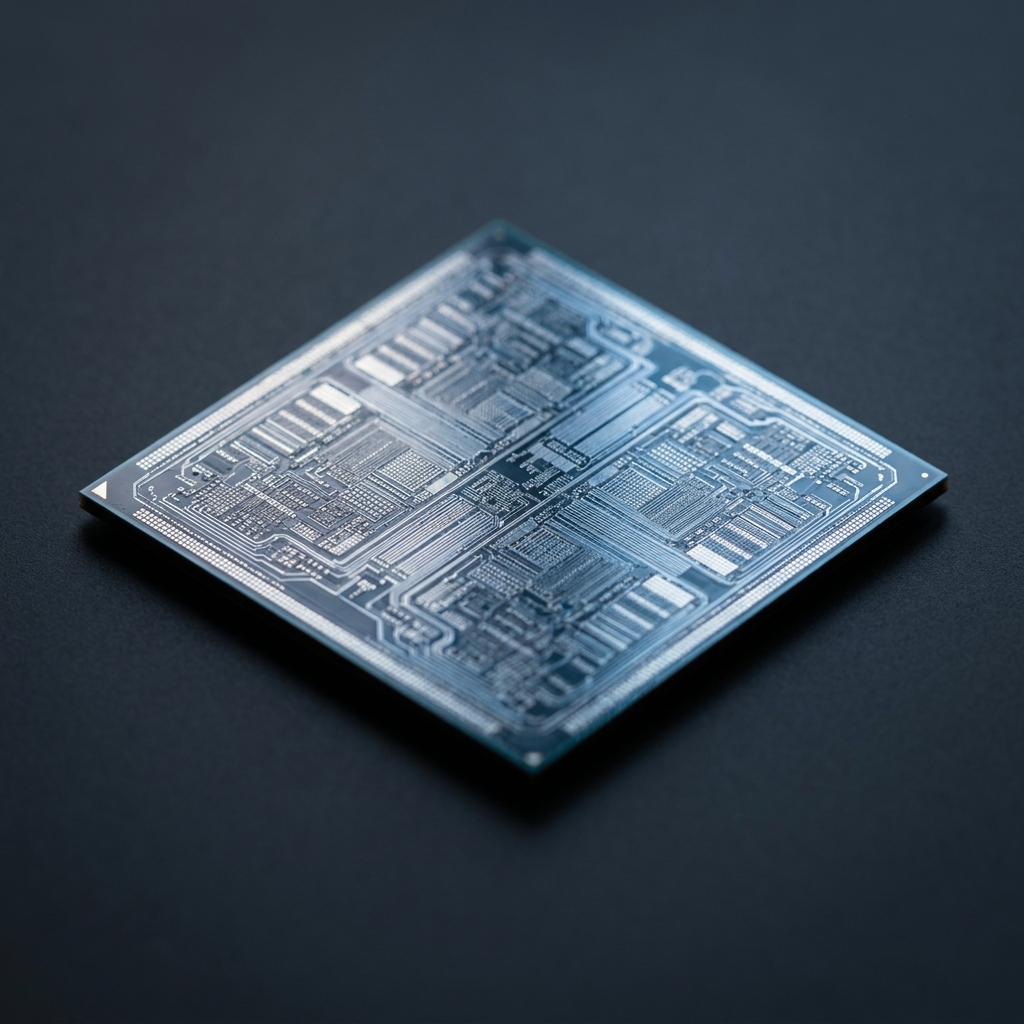
The AI chip shortage vs traditional semiconductor shortage distinction matters. Previous chip crunches, like the one triggered by the pandemic, affected mature-node chips used in cars and consumer electronics. Those shortages eased as existing fabs ramped capacity at established process nodes. The current crisis centers on leading-edge nodes (3nm and 5nm) where only a handful of facilities on Earth can produce the transistor densities that AI accelerators require. You cannot solve a cutting-edge fabrication bottleneck by reopening idle capacity at older nodes. The physics are different, the tooling is different, and the capital requirements are orders of magnitude higher.
Supply-Side Constraints Keeping the Shortage Alive#
Even if demand were to plateau tomorrow, supply-side constraints would take years to fully resolve. The AI chip supply chain is extraordinarily concentrated, and the chokepoints are structural rather than temporary.
Fabrication Bottlenecks and Advanced Packaging#
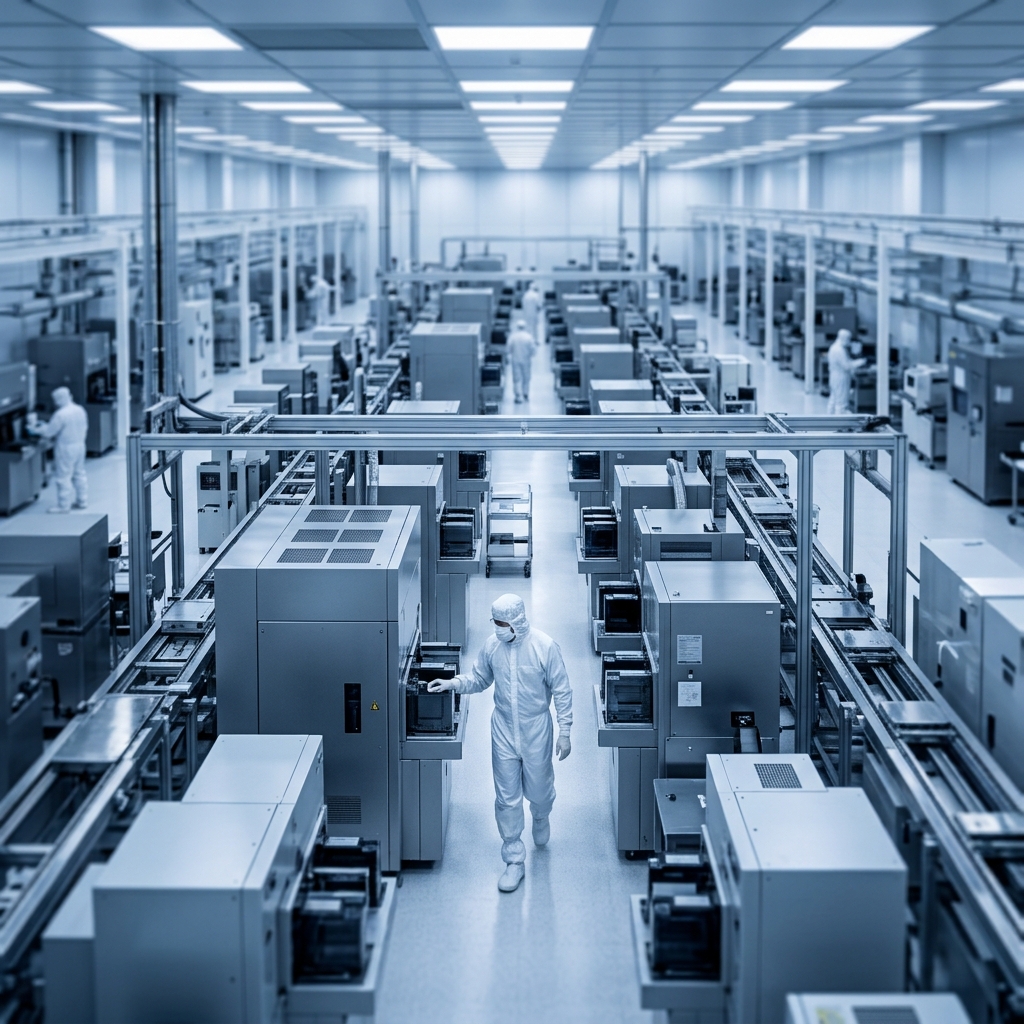
TSMC fabricates an estimated 90% of the world's most advanced AI chips, including NVIDIA's H100, H200, and Blackwell series. No amount of design brilliance from chip architects matters if TSMC's fabs in Taiwan are running at full allocation. The company is investing over $100 billion globally in new fab construction, including facilities in Arizona and Japan, but a cutting-edge semiconductor fab takes three to five years from groundbreaking to volume production.
Beyond the wafers themselves, advanced packaging has emerged as a second bottleneck. Technologies like TSMC's CoWoS (Chip-on-Wafer-on-Substrate) packaging are essential for connecting GPU dies to high-bandwidth memory. Without CoWoS, the high-bandwidth memory stacks that give AI accelerators their data throughput advantage cannot be physically integrated onto the chip package, making packaging capacity as critical as wafer fabrication itself. CoWoS capacity has been a binding constraint on NVIDIA shipments since 2023, and while TSMC has aggressively expanded its packaging lines, demand continues to outpace the new capacity coming online. This is a critical piece of the infrastructure powering frontier models that often gets overlooked in surface-level analysis.
Geopolitics and Export Controls#
The United States has layered increasingly aggressive export controls on advanced semiconductors destined for China, restricting both finished chips and the manufacturing equipment needed to produce them. These controls have reshaped the global AI chip supply chain in two ways. First, the restrictions have redirected chip allocation toward allied nations, intensifying competition among Western buyers. Second, they have spurred China to invest heavily in domestic AI chip manufacturing, which, while still years behind on process technology, adds long-term uncertainty to global supply dynamics. For companies building products atop AI infrastructure, the geopolitical dimension means that supply constraints are not purely an engineering problem. They are a policy problem too, and policy timelines are inherently unpredictable.
Key Players and the Race to Resolve the Shortage#
The path from shortage to equilibrium runs through a specific set of companies, each playing a distinct role in either alleviating or reshaping the competitive landscape for AI compute.
NVIDIA, AMD, Intel, and Custom Silicon#
The NVIDIA chip shortage narrative dominates headlines because NVIDIA controls roughly 80% of the data center GPU market. Its CUDA software ecosystem creates deep lock-in that makes switching costly. However, NVIDIA's dominance relative to AMD is shifting. AMD's MI300X and upcoming MI350 accelerators are gaining traction with hyperscalers looking to diversify, and AMD's use of TSMC's advanced nodes means it competes for the same fab capacity while offering buyers an alternative.
Intel's re-entry into the AI accelerator market with its Gaudi series and its ambitions as a competitive foundry add another variable. If Intel Foundry Services can deliver competitive process nodes domestically, it would meaningfully reduce the industry's dependence on a single Taiwanese supplier. Meanwhile, hyperscalers are developing custom AI silicon: Google's TPUs, Amazon's Trainium and Inferentia chips, and Microsoft's Maia accelerators. These custom chips do not solve the broader market shortage, but they allow the largest buyers to partially step outside the allocation queue. Teams evaluating AI accelerator alternatives beyond GPUs should track these developments closely.
When Will the Shortage Realistically Ease#
Analyst consensus points to a gradual easing between late 2026 and 2028, not a single inflection point. TSMC's Arizona Fab 21 is expected to begin volume production of advanced nodes by late 2026. CoWoS packaging capacity is doubling year-over-year, with meaningful relief projected by mid-2027. Samsung is also ramping its gate-all-around process technology, which could provide an additional high-end foundry option. The combination of new fab capacity, diversified packaging supply, and maturing custom silicon programs should begin to close the gap between supply and demand. But "easing" does not mean "cheap." Even as supply grows, the structural demand for AI compute is growing faster than Moore's Law improvements can deliver, which means AI chips will remain expensive and strategically allocated for the foreseeable future. TechBriefed has been tracking these shifts across the AI landscape to help readers anticipate rather than react.
What Technology Teams Can Do Right Now#
Waiting for the shortage to end is not a strategy. Teams building AI products today need to operate within the constraints that exist now while positioning for the eventual loosening of supply.
Practical Interim Strategies#
Cloud GPU services from providers like CoreWeave, Lambda Labs, and the major hyperscalers offer on-demand access without the capital expenditure and lead times of purchasing hardware directly. Spot and reserved instances can significantly reduce costs if workloads are planned carefully. For startups navigating fundraising conversations, demonstrating a clear compute procurement strategy is increasingly important to investors who understand the bottleneck.
Workload optimization is another lever. Techniques like quantization, distillation, and mixture-of-experts architectures can reduce the number of GPUs required for both training and inference. Open-source models that run efficiently on smaller hardware footprints offer a viable path for many use cases. The teams that treat compute efficiency as a first-class engineering discipline, not an afterthought, will have a meaningful competitive advantage during the shortage and after it.
Diversifying Your Hardware Strategy#
Locking into a single chip vendor is a risk that the current shortage has made painfully visible. Evaluating AMD accelerators, exploring cloud providers that offer custom silicon (like Google Cloud's TPU access), and designing software stacks that are portable across hardware backends are all worthwhile investments. The open-source tooling ecosystem is maturing rapidly to support multi-backend deployment, reducing the switching costs that historically kept teams tethered to CUDA.
Conclusion#
The AI chip shortage is a structural problem rooted in concentrated fabrication capacity, geopolitical friction, and demand that is growing at a pace the semiconductor industry has never seen. Relief will arrive gradually between late 2026 and 2028 as new fabs come online and packaging bottlenecks ease, but supply is unlikely to feel abundant in the near term. The practical response for technology teams is to optimize workloads aggressively, diversify hardware strategies, and treat compute procurement as a strategic function rather than a purchasing task. Those who adapt to the constraint rather than waiting for it to resolve will build more resilient, cost-efficient AI operations on the other side.
Visit TechBriefed for daily analysis on the developments shaping AI infrastructure, semiconductor supply chains, and the broader technology landscape.
Frequently Asked Questions (FAQs)#
What is causing the AI chip shortage?#
The AI chip shortage is caused by explosive demand for advanced AI accelerators colliding with concentrated fabrication capacity at leading-edge nodes, limited CoWoS advanced packaging supply, and geopolitical export controls that restrict the flow of chips and manufacturing equipment. The root constraint is structural: only a handful of facilities globally can manufacture chips at the 3nm and 5nm process nodes that AI accelerators require, and building a new leading-edge fab takes three to five years from groundbreaking to volume production. TSMC alone fabricates an estimated 90% of the world's most advanced AI chips, meaning the entire industry's output depends on a single company's capacity.
How long will the AI chip shortage last?#
Analyst projections point to a gradual easing between late 2026 and 2028 as new TSMC fabs come online, CoWoS packaging capacity doubles, and alternative chip architectures mature. TSMC's Arizona Fab 21 is expected to begin volume production of advanced nodes by late 2026, and Samsung's gate-all-around process ramp adds another foundry option by 2027. Even as supply grows, structural demand for AI compute is expanding faster than fabrication efficiency improvements can offset, so chips will remain expensive and strategically allocated beyond 2028.
How is the AI chip shortage impacting startups?#
Startups face longer lead times, higher cloud compute costs, and increased pressure from investors to demonstrate efficient hardware utilization and realistic compute procurement plans.
What alternatives exist to GPU shortage constraints?#
Teams have several practical paths to work around GPU shortage constraints. Cloud GPU services from providers like CoreWeave, Lambda Labs, and the major hyperscalers offer on-demand access without capital expenditure or lead times. Non-NVIDIA accelerators including AMD's MI300X, Google's TPUs, and Amazon's Trainium are viable for many workloads, especially inference. Workload optimization techniques like quantization, distillation, and mixture-of-experts architectures can reduce GPU requirements significantly without sacrificing model performance.
Why are AI chips in such high demand?#
Demand is driven simultaneously by frontier model training requiring tens of thousands of GPUs, rapidly scaling inference workloads serving millions of users, sovereign AI infrastructure investment, and hyperscaler capital expenditure commitments exceeding hundreds of billions of dollars.
About the author