What Is an NPU and Do You Really Need One?
NPUs are reshaping AI hardware—but do you actually need one? Learn what a neural processing unit does and why it matters for your next device.
By Sable Wren · 6 min read ·
Introduction#
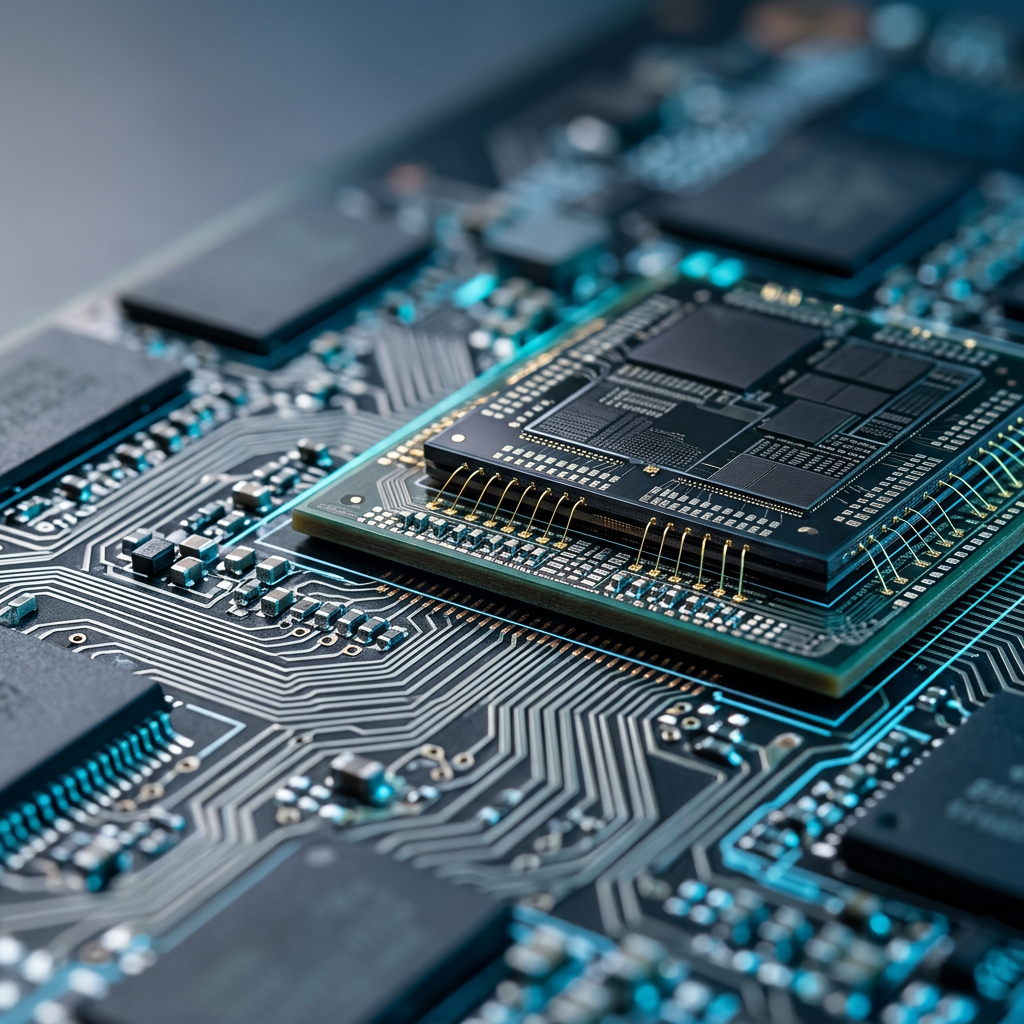
An NPU (neural processing unit) is a dedicated chip designed to accelerate machine learning tasks directly on your device, handling AI workloads that would otherwise drain your CPU or GPU. As NPU technology, as explained in marketing materials, becomes more common across laptops, smartphones, and tablets, the real question for professionals is whether this silicon actually changes how you work or whether it remains a spec sheet footnote. The answer depends on your workflows, but the trajectory is clear: NPU artificial intelligence capabilities are rapidly shifting from novelty to necessity as software vendors build features that demand local inference at scale.
Key Takeaway: An NPU chip offloads AI-specific computations like image recognition, language processing, and noise cancellation from general-purpose processors, delivering faster inference with significantly lower power draw. Whether you need one today depends on how much on-device AI your software stack already leverages.
How NPUs Work and Why They Exist#
The NPU neural processing unit emerged because traditional processors hit a wall when running the parallel matrix operations that neural networks require. Rather than forcing a CPU to handle thousands of multiply-accumulate operations sequentially, or burning GPU power on relatively simple inference tasks, chipmakers built dedicated hardware optimized specifically for these patterns.
The Architecture Behind the NPU#
At its core, an NPU is a specialized hardware accelerator built around systolic arrays or similar structures that excel at tensor math. These arrays process data in a highly parallel, pipelined fashion that mirrors how neural network layers propagate information. The result is dramatically higher throughput per watt for inference tasks compared to general-purpose silicon.
Parallel execution: NPUs process thousands of low-precision operations simultaneously rather than sequentially
Fixed-function efficiency: dedicated data paths for common neural network operations reduce overhead
Low-precision math: INT8 and FP16 operations consume far less power than the FP32 calculations GPUs typically handle
On-chip memory: tightly coupled SRAM reduces the need for expensive off-chip memory access during inference
NPU vs CPU and GPU: Where Each Fits#
The NPU vs CPU performance gap becomes obvious when you examine workload specificity. A CPU handles diverse tasks with flexible instruction sets but struggles with the sheer parallelism neural networks demand. A GPU offers massive parallelism but consumes significant power and is designed primarily for graphics rendering and large-batch training workloads. The NPU occupies a narrow but increasingly critical middle ground: efficient, low-power inference at the edge.
The following table illustrates where each processor type delivers the strongest value for AI workloads.
Attribute | CPU | GPU | NPU |
|---|---|---|---|
Best for | General computing, sequential logic | Training, rendering, large batches | On-device inference, always-on AI |
Parallelism | Low (4-16 cores) | High (thousands of cores) | High (dedicated tensor cores) |
Power efficiency for AI | Poor | Moderate | Excellent |
Precision | FP64/FP32 | FP32/FP16 | INT8/FP16 |
Typical TDP for AI task | 15-65W | 30-350W | 1-15W |
The takeaway is straightforward: if your workload involves running trained models locally (not training them), the NPU delivers the best performance-per-watt by a wide margin. This is why NPU power efficiency has become a primary selling point for mobile and laptop chipmakers targeting AI-native software.
Which Chips Include NPUs and Who Benefits#
Every major silicon vendor now ships an NPU in its flagship and mid-range processors. The competitive landscape has shifted from "does it have an NPU?" to "how many TOPS (trillions of operations per second) does it deliver?" Understanding which chips lead this race helps inform procurement decisions for both consumer devices and enterprise hardware.
Major NPU Implementations in 2024#
Apple's Neural Engine inside the M4 chip delivers up to 38 TOPS, making it the benchmark for laptop-class NPU performance. Qualcomm's Hexagon NPU in the Snapdragon 8 Gen 3 pushes similar territory for mobile, while Intel's Meteor Lake and AMD's Ryzen AI series bring dedicated NPU silicon to Windows laptops for the first time at meaningful scale.
In the smartphone market, NPU adoption across North America has accelerated as both Apple and Samsung embed these units in every device tier. The Samsung Galaxy S26 Ultra and its Exynos/Snapdragon NPU handles real-time translation, photo enhancement, and call screening without sending data to the cloud. Google's Tensor G4 takes a similar approach, running Gemini Nano locally through its dedicated AI core.
For professionals evaluating hardware, device specifications now require scrutiny beyond clock speeds and core counts. TOPS ratings, supported model frameworks, and software ecosystem compatibility matter just as much.
Do You Actually Need an NPU Today?#
The honest answer: it depends on whether your daily software already leverages NPU on-device AI capabilities. If you use features like Windows Copilot's local summarization, Apple's on-device intelligence features, real-time video background blur in calls, or computational photography on your phone, you are already benefiting from NPU acceleration, whether you realize it or not.
For developers building applications that run large language models or inference pipelines locally, NPU machine learning acceleration is becoming a prerequisite rather than a bonus. The gap between cloud-dependent AI and responsive local inference will only widen as models shrink and NPU capabilities grow. TechBriefed has tracked this shift across the broader AI hardware market, where traditional CPUs and GPUs are increasingly insufficient for always-on inference demands. For founders building AI-native products, the NPU is not a future consideration; it is a present constraint that shapes what you can ship to users without relying on expensive cloud compute.
Conclusion#
The NPU is no longer experimental silicon reserved for marketing slides. It is a functional component that directly impacts battery life, AI feature responsiveness, and privacy by keeping data on-device. If your current workflow involves any form of local AI inference, or if you plan to adopt tools that do within the next 12 months, prioritize hardware with a capable NPU. For readers following this space, TechBriefed continues to cover how these architectural shifts translate into real product decisions for developers and buyers alike.
Frequently Asked Questions (FAQs)#
What does NPU stand for?#
NPU stands for Neural Processing Unit, a dedicated hardware accelerator designed specifically to run neural network inference workloads efficiently.
How does an NPU work?#
An NPU processes the matrix multiplication and tensor operations that neural networks require by using massively parallel, low-precision compute arrays optimized for these specific mathematical patterns.
How is NPU different from GPU?#
A GPU is designed for high-throughput parallel graphics and training workloads across many data types, while an NPU is purpose-built exclusively for low-power AI inference using reduced-precision math.
Can NPU replace GPU?#
No, an NPU cannot replace a GPU because it lacks the flexibility for graphics rendering, model training, and general-purpose parallel computing that GPUs handle.
Is NPU necessary for AI?#
An NPU is not strictly necessary to run AI tasks, but it dramatically improves inference speed and power efficiency for on-device machine learning compared to relying on a CPU or GPU alone.
What devices have NPU?#
Most flagship and mid-range smartphones from Apple, Samsung, and Google include NPUs, as do recent laptops with Apple M-series, Intel Meteor Lake, AMD Ryzen AI, or Qualcomm Snapdragon X Elite processors.
Which NPU chip is best for consumers in North America?#
Apple's M4 Neural Engine currently leads in laptop NPU performance with 38 TOPS, while Qualcomm's Snapdragon 8 Gen 3 Hexagon NPU offers the strongest mobile AI acceleration available in North American devices.
About the author