Best Wearable Tech of 2026: Full Buyer's Guide
By Alex Mercer·
Quick Answer
The best wearable tech of 2026 is the device category that solves a specific workflow problem without creating a new data, charging, or adoption burden. Smartwatches remain the most practical general-purpose option, health-monitoring wearables deserve scrutiny around data quality, and AR glasses matter when hands-free information changes how work gets done.
Introduction
Wearable technology is moving beyond step counts into health data, context-aware notifications, workplace workflows, and on-device intelligence. For professionals, the buying decision is less about owning the newest wearable and more about choosing hardware that fits an existing phone, security model, and daily routine. The market is crowded because categories that look similar often produce very different operational outcomes. A device that collects more data is not automatically more useful if its insights are inconsistent or its wearer stops using it.
Key Takeaways:
Choose wearables by workflow value, not sensor count.
Enterprise rollouts need clear consent, governance, and support plans.
AR glasses require a hands-free use case to justify adoption.
Wearable tech categories worth evaluating in 2026
Wearable tech now spans wrist devices, rings, sensor patches, and head-worn displays, but these are not interchangeable purchases. A smartwatch is primarily an interaction surface, a health wearable is a longitudinal data collector, and AR glasses are a visual interface for work performed away from a desk. The right category starts with the decision or task the device must improve.
Define the job the device must do
A useful purchasing brief identifies the user, the moment of use, the data captured, and the action that follows. Research on personal health monitoring shows why a wearable should be assessed as part of a broader care or work routine, not as an isolated gadget. The device earns its place only when it produces a signal that someone can interpret and act on.
Smartwatches: Handle notifications, apps, workouts, and everyday health metrics.
Health wearables: Capture passive trends with fewer screen-driven interruptions.
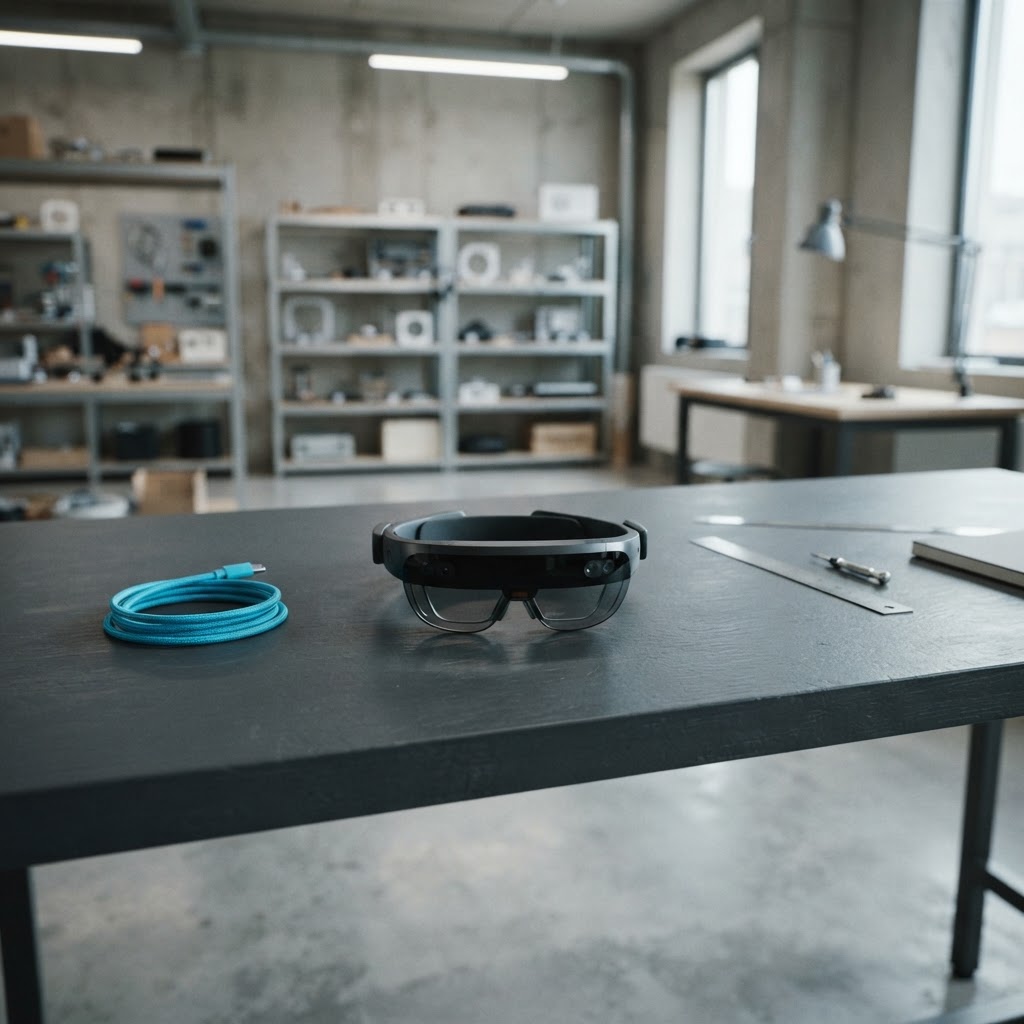
AR glasses: Place instructions or remote guidance in a worker’s field of view.
Specialized sensors: Serve a narrow measurement or clinical-adjacent workflow.
Health data is useful only with context
Integrated health monitoring sensors can surface changes in sleep, activity, and other personal patterns, but they do not eliminate the need for professional judgment. Teams considering tracking health with wearables should separate wellness observations from medical claims, document who can access the data, and decide whether raw readings, trends, or alerts are the actual product requirement. A study of wearable use found that 90% of participants suspended use, a reminder that retention is a more meaningful test than a polished onboarding experience.
How professionals should compare wearable technology
The best wearable technology for professionals is rarely defined by a universal feature checklist. Founders may value quiet access to alerts, engineers may care about dependable integrations and privacy controls, and operations teams may prioritize durability and deployment management. Compare the device against the cost of distraction, support effort, and data risk it introduces.
Smartwatches, health trackers, and AR glasses solve different problems
Smartwatches, health trackers, and AR glasses should be compared by the work they support rather than by a single score. In one review, Fitbit was the most common wearable brand in 10 of 20 studies (50%), while 9 of 20 studies (45%) included multiple brands or discussed wearables generally. The following table separates their core role, the most defensible professional use, and the risk that should stop a rushed purchase.
Category | Primary role | Professional use | Key buying risk |
|---|---|---|---|
Smartwatch | Notifications and apps | Time-sensitive communication | Interruption overload |
Health wearable | Passive personal trends | Individual wellbeing routines | Overreading sensor data |
AR glasses | Hands-free visual guidance | Field and training workflows | Weak workflow integration |
Specialized sensor | Focused measurement | Defined research or care process | Limited interoperability |
The decisive tradeoff in AR glasses vs smartwatches for productivity is attention placement: wrist devices compress interactions, while glasses can keep instructions visible during physical work. Neither category should be deployed merely because it appears more advanced.
For workplace health programs, the operating model matters as much as hardware selection. Evidence from a US academic medical center examined 843 patients (mean age 48 years; 41% female) who connected wearable data to an electronic health record between 2023 and 2025, with engagement assessed over a three-month period. That structure is instructive for enterprise wearable device deployments: define onboarding, data flow, opt-out terms, support ownership, and the measure of continued participation before buying devices.
Security, reliability, and battery determine real adoption
Battery efficiency shapes whether users collect continuous data or abandon the routine when charging becomes inconvenient. Evaluate permission controls, account recovery, encryption disclosures, mobile-device management compatibility, export options, and sensor behavior during poor connectivity. On-device AI processing may reduce reliance on constant cloud transfers, but it does not replace a review of vendor retention policies or administrative access.
Businesses that treat wearable data as casual telemetry make predictable mistakes: they gather too much, lack a legitimate purpose for each field, and leave managers uncertain about what they may view. Stanford’s definition of digital health technologies includes wearables, mobile medical apps, software, and AI or machine learning, which is a useful framing for governance. The more a deployment influences care, benefits, or employment decisions, the less acceptable informal data handling becomes.

What the wearable market signal actually means
Wearable device industry trends point toward more capable sensors and more software layers built around their data, not a clean replacement for phones or laptops. The commercial question is whether vendors can turn intermittent consumer engagement into dependable, consent-based workflows. A research review found that 60% of included studies were published in the United States, showing how strongly US research has shaped the evidence base while also limiting assumptions about other settings.
Do not confuse wellness metrics with clinical evidence
Tests of biological age and markers of longevity can be compelling as personal context, but they should not be presented as a diagnosis or a replacement for clinical assessment. Reliability depends on the sensor, the algorithm, the population used to develop it, and changes in user behavior. A credible vendor explains what a metric represents, how it is derived, and what conditions can distort it.
Buy pilots, not promises
For a business, a limited pilot with an explicit success criterion is more informative than a broad procurement based on launch-day claims. Track whether users complete the target task faster, whether supervisors can support the devices, whether data reaches the intended system, and whether users continue wearing them after novelty fades. TechBriefed’s daily technology analysis is useful for watching the product and market changes that can alter those assumptions between a pilot and a wider rollout.
Conclusion
Wearables are worth buying in 2026 when the category matches a concrete task: a smartwatch for controlled communication, a health device for personal trends, or AR glasses for genuinely hands-free work. Demand evidence of reliability, understand the data path, and measure sustained use rather than initial enthusiasm. Consumer devices can inform workplace experimentation, but deployment requires consent, security controls, and an owner for the workflow. The next phase of the market will favor products that make their data actionable without making users carry the operational burden.
For concise analysis of product shifts that affect technology teams, follow TechBriefed for the signal behind the announcements.
Frequently Asked Questions (FAQs)
How does wearable tech impact daily productivity?
Wearable tech impacts daily productivity by reducing the friction of checking relevant information, but it improves output only when notifications are filtered to decisions or actions that genuinely require attention.
What are the latest breakthroughs in smart wearable sensors?
The latest breakthroughs in smart wearable sensors center on broader passive measurement and software interpretation, although the usefulness of any result still depends on validation, context, and consistent real-world wear.
Why is wearable technology important for the future of healthcare?
Wearable technology is important for the future of healthcare because it can extend observation beyond appointments, while clinical use still requires careful integration, patient consent, and meaningful review of the resulting information.
Can wearable devices improve remote team management?
Wearable devices can improve remote team management when they support a defined field, safety, or communication workflow, but passive monitoring of employees can damage trust without a clear purpose and strict boundaries. AI-powered health coaches should likewise be evaluated as supportive tools rather than replacements for professional judgment.
What are the biggest challenges facing the wearable tech industry?
The biggest challenges facing the wearable tech industry are sustained user engagement, battery constraints, inconsistent data interpretation, fragmented integrations, and privacy practices that do not match the sensitivity of biometric information.
Is wearable technology secure for enterprise data?
Wearable technology is secure for enterprise data only when the organization verifies identity controls, data access, retention practices, integration security, and a process for lost devices before allowing business information to flow through it.
What is the difference between fitness trackers and smart wearables?
The difference between fitness trackers and smart wearables is that trackers concentrate on activity-oriented measurement, while smart wearables often add apps, notifications, communications, or specialized interfaces that broaden their role.
About the Author
Alex Mercer is a Senior Tech Writer focused on translating fast-moving product and market developments into clear decisions for technology professionals. His work emphasizes practical constraints, technical tradeoffs, and the commercial significance behind new hardware and software categories.