How Accurate Is Biological Age Testing in 2026?
By Riley Cho·

Quick Answer
Biological age testing is useful for estimating patterns associated with aging, but it is not accurate enough to function as a personal diagnostic or a precise measure of how fast you are aging. DNA methylation clocks have the strongest research base, while telomere and routine biomarker approaches provide narrower, more variable signals.
Introduction
Biological age testing accuracy depends less on the polished consumer report than on the clock, tissue source, laboratory process, and intended use. A result can be scientifically grounded and still be misleading when interpreted as a verdict on an individual’s health trajectory. The serious use case is trend detection under consistent conditions, not treating a single score as a clinical truth. For operators trained to challenge product benchmarks, the relevant question is whether the measurement is reproducible, interpretable, and decision-useful.
Key Takeaways:
Epigenetic clocks estimate age-related molecular patterns rather than directly measuring health or lifespan.
Use repeat tests from the same provider and sample type to assess trends, not isolated scores.
Clinical biomarkers remain easier to interpret when a result requires medical follow-up.
What Biological Age Tests Actually Measure
Measuring physiological age vs chronological age means modeling signals that correlate with aging, not discovering a hidden age stored inside the body. Consumer reports usually convert one or more measurements into an age estimate or an age-acceleration score, then compare it with calendar age. That model can identify population-level associations without proving that a person is biologically younger, healthier, or safer from disease.
DNA Methylation Is the Most Developed Approach
Epigenetic clock testing measures chemical tags attached to DNA at selected genomic sites, then applies a trained statistical model. Clocks such as GrimAge and PhenoAge were designed around different targets, so their outputs should not be treated as interchangeable rankings. The biological age biomarkers behind a score matter more than the dashboard’s single headline number.
Chronological clocks: These are trained to estimate calendar age from methylation patterns.
Phenotype-linked clocks: These incorporate relationships with clinical measures associated with aging.
Risk-oriented clocks: These are designed to capture patterns associated with mortality or health outcomes.
Sample dependency: A clock trained on one tissue can behave differently when used on another.
Why the Same Person Can Receive Different Results
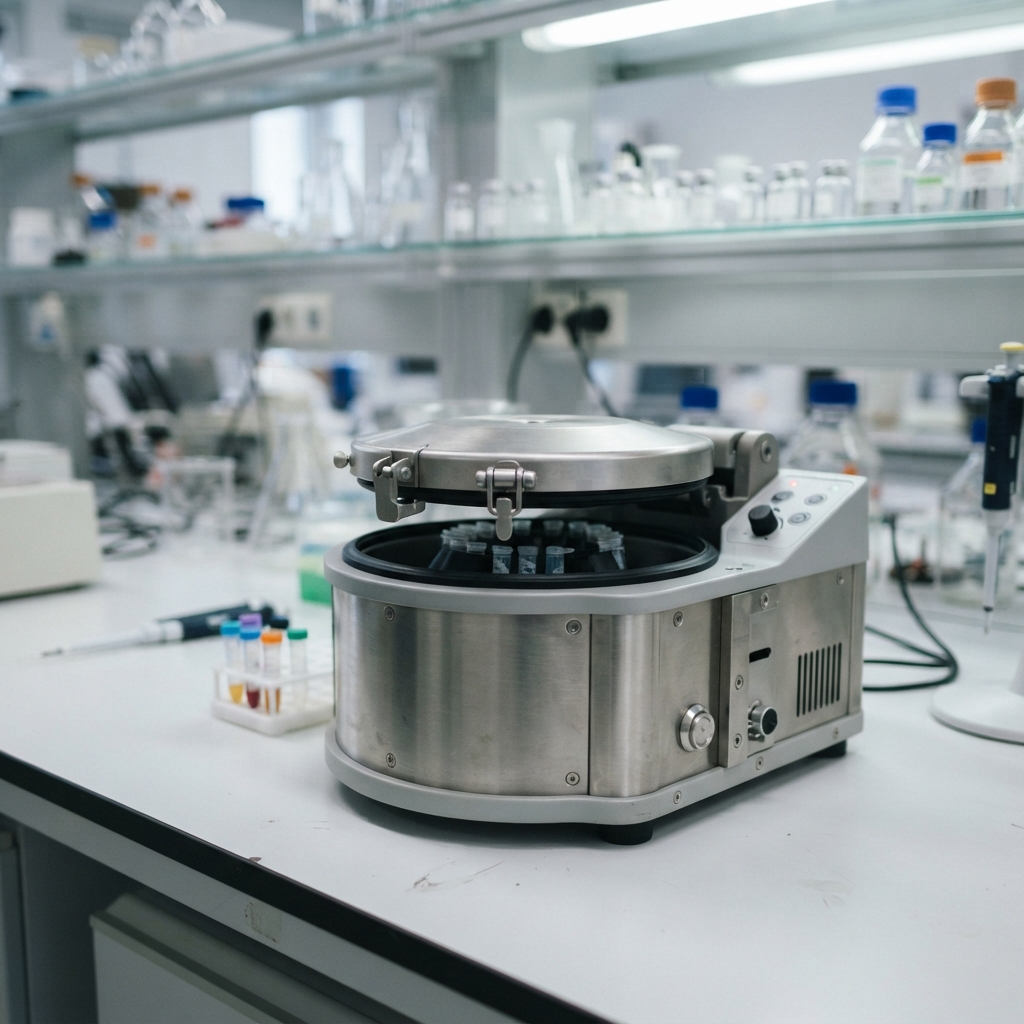
The science behind biological age clocks includes meaningful technical uncertainty. Technical uncertainty can be meaningful, especially when results are compared across different sample types, assays, or models. A clock built and validated for one tissue should not be assumed to produce interchangeable estimates in another, according to a review of clock limitations.
How the Main Testing Methods Compare
How does biological age testing work across methods? Each approach converts an age-related signal into a summary estimate, but the inputs and validation standards differ materially. That is why an apparent disagreement between tests may reflect different biology rather than an obvious laboratory error.
GrimAge, PhenoAge, Telomeres, and Biomarker Panels
A GrimAge vs PhenoAge comparison is most useful when framed around model intent. GrimAge focuses on methylation patterns associated with mortality-related risk proxies, while PhenoAge connects methylation with a phenotypic age construct derived from clinical chemistry and physiological measures. Neither score should be read as a consumer-grade diagnosis.
This table shows what each method can reasonably support and where its claims should stop.
Method | Primary input | Useful output | Core limitation |
|---|---|---|---|
GrimAge-style clock | DNA methylation | Risk-associated aging signal | Not a direct lifespan forecast |
PhenoAge-style clock | DNA methylation and phenotype-linked modeling | Age-related physiological pattern | Model output depends on training assumptions |
Telomere test | Telomere length | One cellular aging indicator | Higher measurement variability across methods |
Biomarker panel | Blood chemistry and physiological measures | Actionable clinical risk context | Does not provide one universal aging mechanism |
Telomere length testing reliability is weaker as a standalone consumer signal because telomere measurements vary by tissue and assay. In one study, replicate pyrosequencing runs showed a 1.7% coefficient of variation, while the telomere T/S ratio averaged a 9% coefficient of variation across consecutive days; a comparison of aging markers found that methylation age and telomere length each captured age-related cellular dysfunction rather than a single universal biological age.
What Clinical Validation Can and Cannot Prove
Validation of commercial age testing services should distinguish analytical validity from clinical utility. A laboratory can measure methylation consistently, and a model can predict age in a study dataset, without proving that changing your score caused a better health outcome. Clinical-biomarker models can be evaluated with regression error measures, and biological-age prediction models have used separate training and test datasets, but that does not make every consumer interpretation clinically validated.
For practical tracking, pair a clock with longevity biomarkers that have clear clinical meaning, such as glucose, cholesterol, or creatinine. These measures are often easier to interpret in a clinical context than a composite age estimate.

How to Judge a Consumer Biological Age Report
Advanced analytics do not by themselves make a wellness score suitable for clinical diagnosis. Ask what specimen was tested, which clock was used, whether the laboratory reports reproducibility, and whether the provider clearly separates association from medical advice. TechBriefed applies the same filter to consumer health technology that it uses for product claims: inspect the measurement layer before trusting the interface.
Use Longitudinal Data, Not a One-Time Score
A biological clock calculator is most defensible when you repeat it under similar sampling conditions and treat movement as a hypothesis to investigate. Sudden shifts may reflect sample handling, cellular composition, timing, or model noise rather than a dramatic improvement or decline. Pair results with wearables versus blood tests that track your biomarkers, because activity and sleep data can provide behavioral context while laboratory measures can identify clinically actionable changes.
Spend Only When the Decision Is Clear
Best biological age test kits are not defined by the lowest displayed age; they are defined by transparent methodology, consistent sampling, and reporting that avoids causal promises. Before paying, decide what action a changed score would trigger, such as discussing a conventional lab result with a clinician or reviewing training, sleep, and nutrition routines. For self-directed monitoring, inflammation markers at home may offer a more concrete discussion point than an unexplained age delta.
Conclusion
Biological age tests are science, but the marketing often outruns what the measurements can establish for one person. DNA methylation clocks are the most credible category for aging research, yet their estimates remain sensitive to tissue, assay, model design, and repeatability. Treat results as directional data, verify meaningful changes with established clinical markers, and reject providers that frame a wellness score as a diagnosis. Follow TechBriefed for practical analysis of consumer technology claims that deserve more scrutiny.
Frequently Asked Questions (FAQs)
How accurate is biological age testing really?
Biological age testing is reasonably accurate for estimating age-related patterns in groups, but individual scores can vary because sample type, laboratory processing, model design, and ordinary biological fluctuations all influence the final estimate.
Can you reverse your biological age?
You may change factors associated with a biological age score through health behavior and medical care, but a lower score alone does not prove that aging has been reversed or that future disease risk has changed.
What markers are used in biological age testing?
Biological age testing can use DNA methylation patterns, telomere length, blood chemistry, physiological measurements, and composite risk models, with each marker reflecting a different dimension of age-related change.
Is epigenetic testing worth the investment?
Epigenetic testing is worth the investment only when you understand its method, can repeat it consistently, and will use the result as one data point alongside clinically interpretable health information.
Are biological age tests scientifically validated?
Biological age tests are scientifically validated to varying degrees for age estimation and population associations, but many consumer-facing claims about individualized treatment decisions, disease prediction, or lifespan remain insufficiently established.
Are home biological age test kits accurate?
Home biological age test kits can produce useful trend data when collection and processing are reliable, but home sampling introduces additional variability and cannot replace medical evaluation of symptoms or abnormal clinical results.
About the Author
Riley Cho is a content strategist focused on translating complex technology claims into practical decision frameworks. Their work emphasizes evidence, product mechanics, and the gap between a compelling metric and a genuinely useful one.