What Is an NPU? Neural Processing Units Explained (2026)
Confused about NPUs? This 2026 guide explains neural processing units, their role in AI acceleration, and why they matter now.
By Sable Wren · 8 min read ·
Quick Answer#
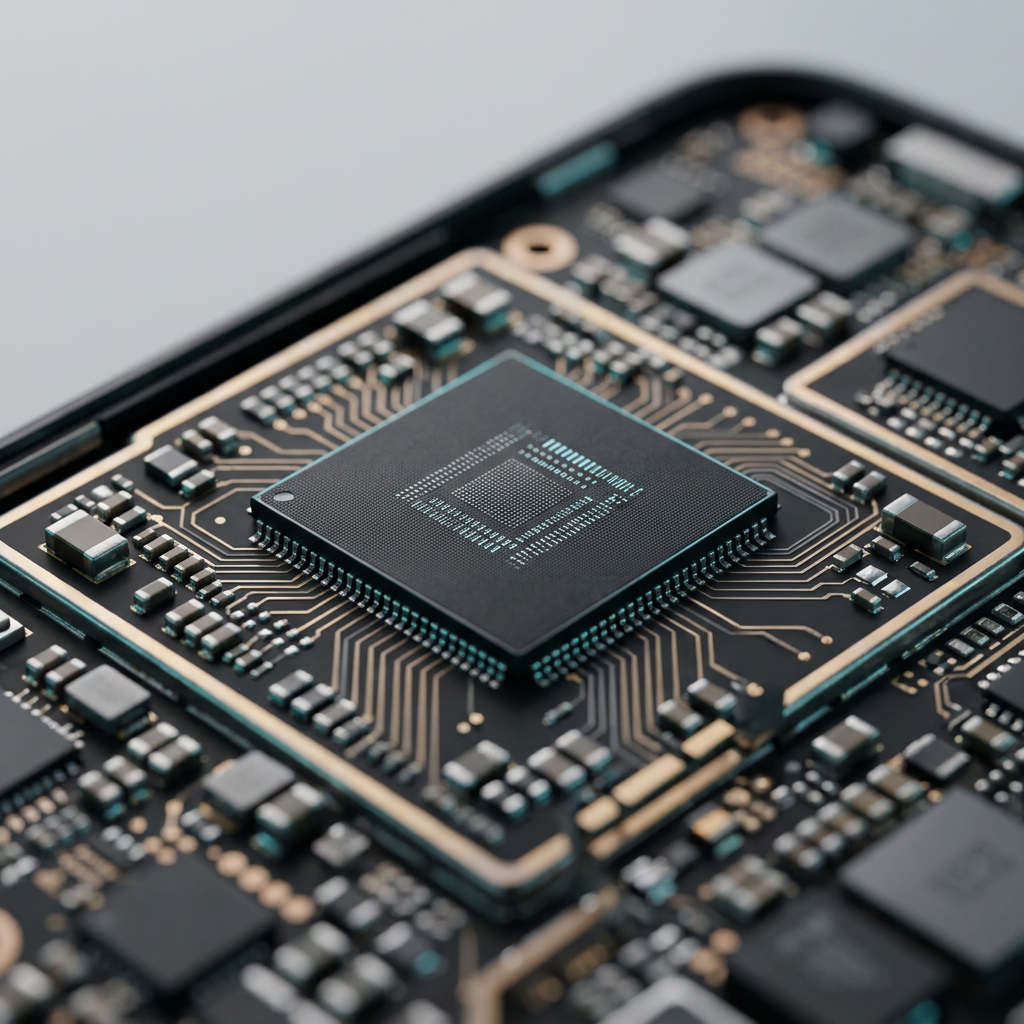
A Neural Processing Unit (NPU) is a specialized silicon block designed to accelerate machine learning workloads, particularly the matrix and tensor operations that power modern AI models. Unlike a CPU or GPU, an NPU is purpose-built for low-power, high-throughput inference directly on the device, making it the core enabler of on-device AI in laptops, smartphones, and edge hardware in 2026.
Introduction#
Every major chipmaker now markets its silicon around a single number: TOPS, or trillions of operations per second, delivered by a dedicated NPU. Apple, Qualcomm, Intel, AMD, and MediaTek have all shipped processors in which the neural processing unit is treated as a first-class citizen alongside the CPU and GPU, not a footnote. The reason is straightforward. Generative models, real-time transcription, background blur, semantic search, and agentic assistants all demand sustained AI compute that a general-purpose processor cannot deliver efficiently. What separates a marketing NPU from a technically meaningful one, though, comes down to architecture, memory bandwidth, and how much of the AI stack the chip can actually run without falling back to the cloud.
Key Takeaways:
An NPU is a domain-specific accelerator optimized for the matrix math that underpins neural network inference.
NPUs differ from GPUs by trading raw parallel compute for power efficiency and dedicated tensor pipelines suited to on-device AI.
In 2026, a competitive NPU delivers 40 TOPS or more and is the baseline requirement for Copilot+ class AI PCs.
What Is an NPU and How It Works#
A neural processing unit is a hardware block engineered specifically to execute the linear algebra operations that dominate neural network workloads. Where a CPU handles serial logic and a GPU handles massively parallel graphics or general compute, the NPU chip is tuned for one thing: multiplying and accumulating large tensors at low precision with minimal power draw. This narrow specialization is what makes on-device inference practical on battery-powered hardware.
The Architecture Behind NPU AI Acceleration#
NPUs achieve their efficiency by hardcoding the primitives that neural networks depend on into silicon, rather than emulating them through general-purpose instructions. Most modern designs share a common set of building blocks, and understanding them clarifies why the numbers on a spec sheet matter. The neural processing unit architecture reference from Wikipedia gives a useful baseline for the components below.
Systolic arrays: Grids of multiply-accumulate units that pipeline tensor operations without repeatedly reading intermediate results from memory.
Low-precision math: Native support for INT8, INT4, and FP16 formats, which dramatically reduce power and memory footprint versus FP32.
On-chip SRAM: Local memory that keeps model weights and activations close to compute, avoiding costly trips to DRAM.
Dedicated schedulers: Fixed-function control logic that orchestrates layers of a model with far less overhead than a CPU or GPU driver stack.
Sparsity acceleration: Hardware that skips zero-valued weights, a feature that has become standard in 2026 flagship parts.
Where NPUs Fit in the Modern SoC#
On a system-on-chip, the NPU sits alongside the CPU and GPU and shares system memory through a unified fabric, allowing AI workloads to be dispatched without copying tensors across discrete devices. This tight coupling is what makes on-device AI processing feasible for latency-sensitive tasks like live captioning or camera pipelines, and it is a core reason vendors have moved away from bolting external accelerators onto older platforms. For teams evaluating hardware specifications for AI, the NPU's memory bandwidth and TOPS rating together tell you far more than either figure alone.
NPU vs GPU vs CPU: The Real Differences#
Comparing an NPU to a GPU or CPU is less about which is faster in absolute terms and more about which is right for a given workload. Each processor type reflects a different set of engineering tradeoffs around parallelism, precision, and power.
NPU vs GPU vs CPU at a Glance#
The table below summarizes how the three processor types compare across the dimensions that matter most for AI workloads in 2026.
Processor | Primary Workload | Precision Focus | Power Efficiency | Best For |
|---|---|---|---|---|
CPU | Serial logic, control flow | FP32, FP64 | Low for AI | Orchestration, small models |
GPU | Parallel compute, training | FP32, FP16, BF16 | Moderate | Model training, large inference |
NPU | Neural network inference | INT8, INT4, FP16 | High | On-device AI, sustained inference |
TPU | Datacenter tensor ops | BF16, INT8 | High at scale | Cloud training and serving |
The practical takeaway is that GPUs still dominate training and heavy cloud inference, but for the always-on AI features shipping in consumer devices, the NPU wins on sustained performance per watt. This is also why the NPU vs TPU comparison matters less for end users: TPUs are Google's datacenter-scale answer to the same problem, not something you buy in a laptop.
Why NPUs Are Not a GPU Replacement#
NPUs are optimized for inference, not training, and they operate at lower numerical precision than most GPUs support natively. That makes them poorly suited to workloads that require FP32 accuracy or the flexibility of a full CUDA-style programming model. Founders evaluating hardware for training pipelines should still budget for GPUs, and readers tracking AI chip market competition will notice that NPU adoption has not meaningfully dented Nvidia's grip on the training market. According to Penn faculty analysis, NPUs are specifically customized for the matrix arithmetic that inference relies on, which is a narrower target than what a GPU is built to hit.
Real-World Applications and Industry Trajectory#
NPUs have moved from a curiosity in mobile chips to the defining feature of the 2026 PC refresh cycle, and their footprint now extends across smartphones, laptops, wearables, automotive systems, and industrial edge devices. The applications that justify the silicon are increasingly the ones users interact with every day.
Where NPUs Actually Get Used in 2026#
NPU smartphone chips handle computational photography, live translation, and on-device model routing for assistants, while NPU laptop performance has become the gating factor for features like Windows Recall, local Copilot inference, and real-time studio effects. Automotive systems use NPUs for sensor fusion and driver monitoring, and industrial deployments rely on them for vision inspection at the edge. Research from deep neural network architectures in ScienceDirect documents how these accelerators underpin everything from self-driving cars to drones. Teams designing for distributed inference should also review edge computing fundamentals to understand how NPU-equipped nodes reshape latency budgets, a shift TechBriefed has tracked closely across its coverage.
The Silicon Valley and US Manufacturing Angle#
Most NPU intellectual property still originates from US-based design teams at Apple, Qualcomm, Intel, AMD, and Nvidia, even as fabrication remains concentrated at TSMC in Taiwan and Samsung in South Korea. NPU adoption Silicon Valley has driven is now producing measurable second-order effects: startups building AI-native applications assume a local accelerator is present, which changes what ships to the cloud and what stays on the client. Supply dynamics matter here too, and readers following AI chip availability and shortage trends have seen how NPU-equipped SoCs have so far avoided the worst of the datacenter GPU crunch.
Conclusion#
Neural processing units are no longer a niche accelerator; they are the load-bearing component of the AI PC and mobile category, and their TOPS ratings have become a legitimate purchasing criterion for 2026 hardware. For engineers and decision-makers, the practical framing is straightforward: an NPU determines what AI features run locally, how much they cost to operate at scale, and whether a device can keep pace as models get pushed further toward the edge. Coverage from TechBriefed continues to track how these architectural choices translate into shipped products and enterprise capabilities. The chipmakers that win the next cycle will be those whose NPUs pair raw throughput with a software stack developers actually want to target. Buyers should look past the marketing TOPS figure and evaluate memory bandwidth, precision support, and framework compatibility before committing.
Want sharper analysis of the silicon shaping AI in 2026? Subscribe to TechBriefed for daily intelligence on the hardware and platform shifts that matter.
Frequently Asked Questions (FAQs)#
What does NPU stand for?#
NPU stands for Neural Processing Unit, a specialized hardware accelerator built to run neural network operations efficiently.
What is an NPU used for?#
An NPU is used for on-device AI tasks such as image processing, speech recognition, generative AI inference, and background features like noise suppression and semantic search.
How does an NPU work?#
An NPU works by executing low-precision matrix and tensor operations through dedicated systolic arrays and on-chip memory, minimizing power draw compared to running the same workload on a CPU or GPU.
Do I need an NPU in my laptop?#
You need an NPU if you plan to use local AI features like Copilot+, live captioning, or on-device model inference, though workloads that rely on cloud APIs will run fine without one.
Is NPU better than GPU for AI?#
An NPU is better than a GPU for sustained on-device inference at low power, but a GPU remains superior for training and high-precision workloads.
What is a good NPU TOPS rating in 2026?#
A good NPU delivers at least 40 TOPS to meet Copilot+ requirements, with flagship parts from Apple, Qualcomm, and Intel now pushing 45 to 80 TOPS.
Which laptops have the best NPU in 2026?#
The best laptops with NPU 2026 lineups include machines built on Qualcomm Snapdragon X Elite, Intel Core Ultra Series 2, AMD Ryzen AI 300, and Apple's M4 family, all of which exceed the 40 TOPS threshold.
About the author

 What Is an NPU and Do You Really Need One?
 What Is an NPU and Do You Really Need One?
 What Should an MVP Budget Look Like in 2026?
 How to Get Your Startup Cited by AI Tools in 2026