Smart Ring vs Smart Glasses: Which AI Gadget Wins 2026?
A head-to-head look at how smart rings and smart glasses stack up as the leading AI wearables of 2026.
By Riley Cho · 6 min read ·

Quick Answer
Among the latest gadgets for AI-assisted work in 2026, smart glasses win because they can interpret the surrounding environment and deliver context while you act. Smart rings remain the lower-friction choice for discreet sensing and gesture input, but they cannot match glasses for visual, egocentric assistance.
Introduction
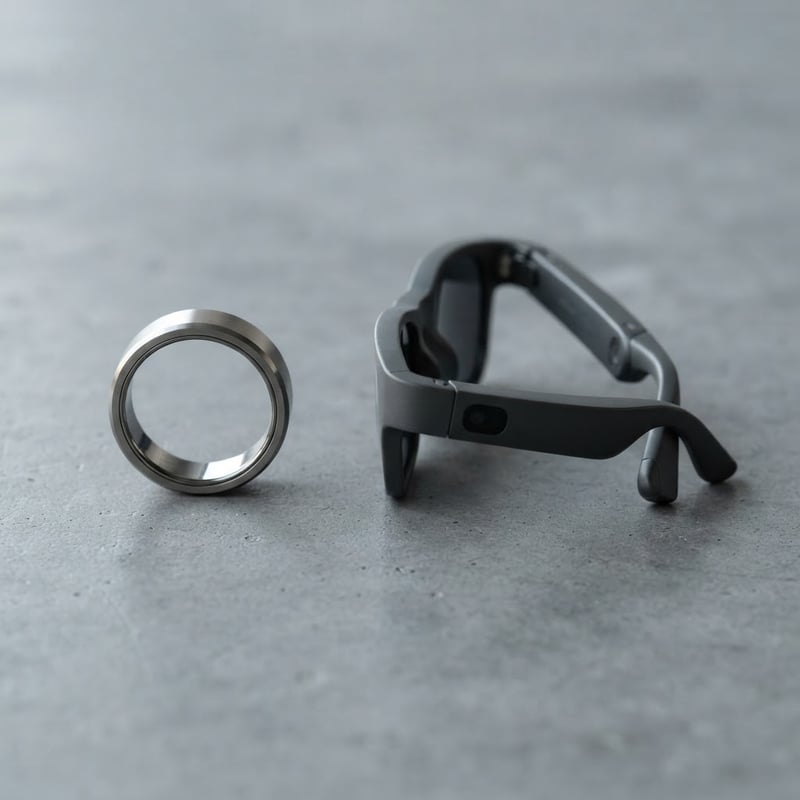
For founders, engineers, and investors, the meaningful question is not which device looks more futuristic. It is which form factor turns AI-integrated hardware into useful workflow infrastructure without creating more friction, distraction, or privacy risk. Smart glasses capture what you see and hear, while rings focus on signals from your hand and body. That difference determines whether a wearable becomes a passive tracker, an input device, or an active computing layer.
Key Takeaways
Smart glasses have the deeper path to contextual AI assistance.
Smart rings are more discreet for sensing and gesture-based control.
Privacy design will shape enterprise adoption as much as hardware capability.
Why Smart Glasses Lead in Advanced Wearable Technology
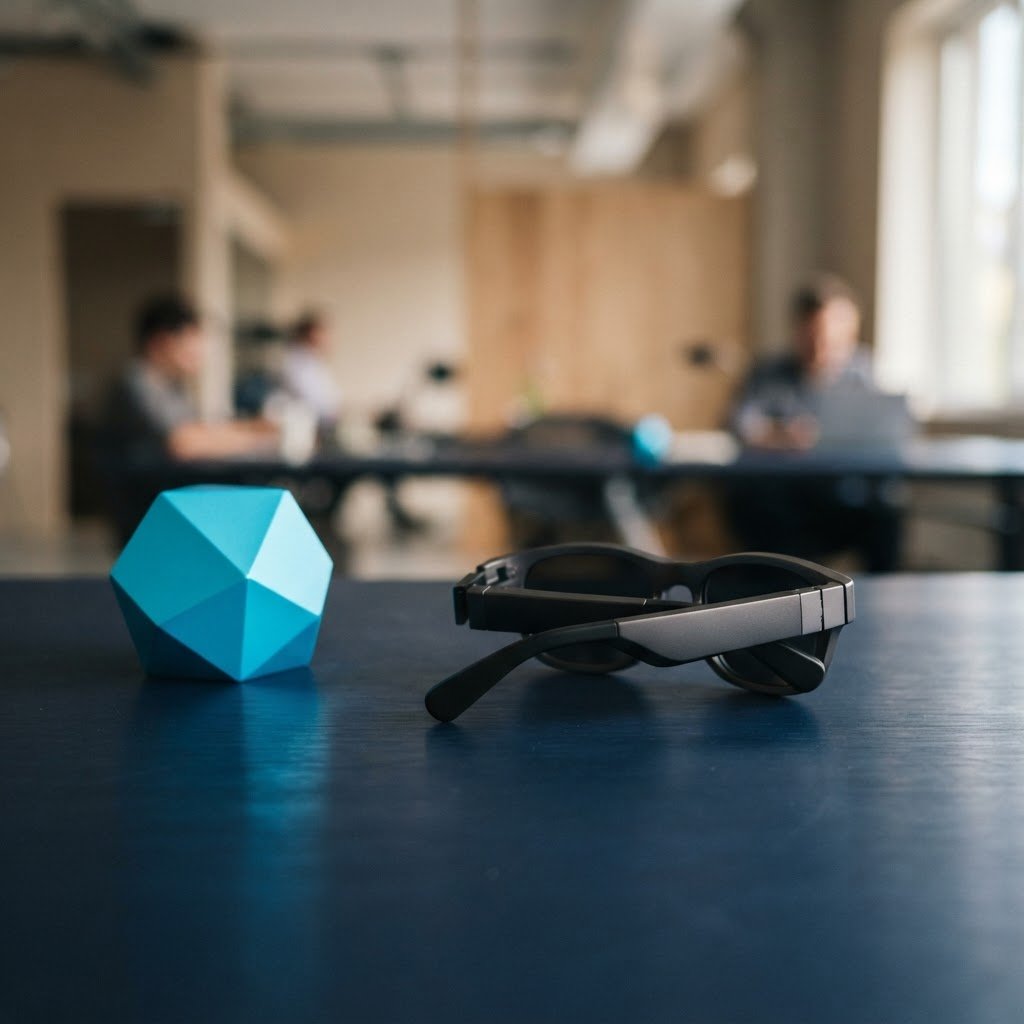
Smart glasses lead because they can continuously observe the wearer's surroundings from an egocentric perspective, creating the raw context an AI assistant needs to interpret a meeting, workspace, or task. That does not make them universally practical, but it gives them a broader ceiling than a device built primarily around physiological and motion signals.
Context turns sensing into assistance
Glasses can combine environmental observations with computing platforms that interpret surroundings and support user assistance. This is the central shift from recording media to closed-loop, multimodal perception and inference, described in research on AI smart glasses.[1] It is the same underlying move toward agentic AI that enterprise software is already going through. For a professional workflow, the value is not a novelty overlay. It is reducing the gap between what is happening around you and the information an assistant can use.
Meeting context: Audio and visual cues can inform timely assistance.
Field visibility: First-person perspective supports situated guidance.
Hands-free access: Prompts can arrive without reaching for a phone.
Live constraints: Size, weight, and power limit sustained intelligence.
Rings solve a narrower interaction problem
Smart rings are compelling because fingers produce subtle, abundant movements that a wearable can detect without adding a screen to the face. Recent ring gesture accuracy research on a finger-worn vibroacoustic sensor reported 94.2% classification accuracy across an 11-gesture set using a convolutional neural network.[2] That is useful for quiet input, but gesture recognition alone does not provide external context for agentic task support, and it still leaves the physiological side of the picture to dedicated wearable health tracking and wearable health data comparisons.
Smart Ring vs Smart Glasses: Practical Trade offs
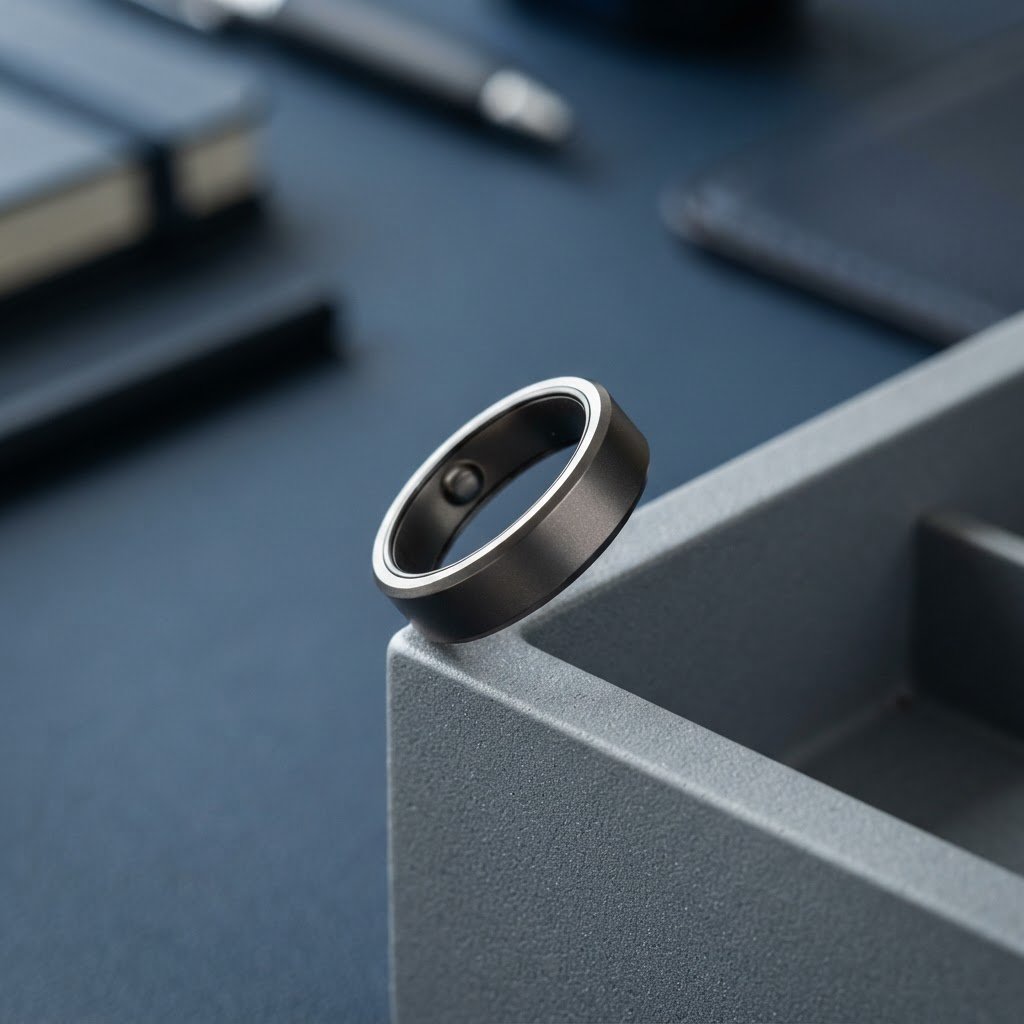
These are not identical categories competing for the same job. A ring is fundamentally a compact sensor and interaction surface, while glasses are a sensing-and-output system capable of placing AI closer to the moment of work. The latest gadgets worth attention, including our broader roundup of best wearable tech, are the ones that make this division explicit rather than promising one device can do everything.
What each form factor can realistically do
The table separates the capabilities supported by current technical research from the claims often implied by product marketing. Pricing, battery duration, and complete feature lists should not drive a purchase thesis until they are disclosed.
Decision area | Smart ring | AI smart glasses |
|---|---|---|
Primary sensing | Hand movement and body-related signals | Wearer and environment observations |
AI context | Limited external context | Egocentric, multimodal context |
Interaction | Subtle gestures and passive sensing | Situated prompts and assistant responses |
Hardware pressure | Very small input-focused form factor | Real-time intelligence under size, weight, and power constraints |
The operational takeaway is straightforward: choose rings when unobtrusive input and sensing matter most, and prioritize glasses when the AI must understand the work setting before it responds.
Enterprise deployment is a trust problem
Smart workplace devices will stall if employees and bystanders cannot tell what is being captured, retained, or shared. The ICO notes that some wearable uses are deeply concerning, while its regulatory sandbox work with Cross Sense considered privacy safeguards alongside smart glasses intended to support people living with dementia. That makes privacy safeguards a product requirement, not a legal afterthought. It is the same enterprise AI governance challenge already playing out with AI agents more broadly.
How to evaluate the investment signal
Do not treat either category as a broad replacement for laptops or phones. Evaluate whether the device shortens a specific workflow, whether staff can control sensing clearly, and whether the AI has enough context to make reliable interventions. This is where TechBriefed's daily technology analysis is useful: the commercial signal is less about a hardware launch and more about durable behaviour change.
Conclusion
Smart glasses win this comparison for technology professionals because contextual sensing gives AI a route into real tasks, not just personal metrics or gesture control. Smart rings still have a defensible role where discretion, passive sensing, and hand-based input are the priority. Teams should test both form factors against a narrowly defined workflow and build privacy controls into the evaluation from day one. For readers tracking AI hardware through a business and engineering lens, TechBriefed provides a practical filter on what deserves attention.
Want a calmer read on emerging hardware? Get TechBriefed's concise analysis of the technology that matters.
Frequently Asked Questions (FAQs)
Are smart rings better than smart glasses for US professionals?
Smart rings are better for US professionals who need discreet gesture input or passive sensing, while smart glasses are more capable when an AI assistant must interpret the surrounding workspace and respond in context.
What are the best gadgets for tech professionals?
The best gadgets for tech professionals remove friction from a defined task, so a wearable should be judged by whether it improves a meeting, field process, or hands-free interaction instead of adding another notification channel.
Is this gadget worth the investment for startups?
A wearable gadget is worth the investment for startups only when a small pilot proves it reduces a meaningful operational burden and can be deployed with clear consent, security, and support practices.
What is the future of wearable gadgets in the enterprise?
The future of wearable gadgets in the enterprise depends on devices that pair useful contextual assistance with transparent controls over sensing, data handling, and the boundaries of acceptable use.
How do smart gadgets integrate with current AI tools?
Smart gadgets integrate with current AI tools by supplying inputs such as hand movements, physiological signals, audio, and environmental observations that an AI system can interpret before generating assistance.
How to evaluate new consumer tech launches?
Evaluate new consumer tech launches by separating demonstrated sensing and interaction capabilities from unproven workflow claims, then testing whether the device remains useful under normal privacy and power constraints.
Sources
- AI Smart Glasses for Wearable Intelligence: From Egocentric Sensing to Agentic Personalization — arxiv.org ↩
- A Smart Ring with a Smart Design — hackster.io ↩
About the author

 Data Breach vs Security Incident: What Startups Need in 2026
 Edge Computing vs Cloud Computing: Which Wins for AI in 2026
 AI Due Diligence vs Manual Review: Which Wins for M&A Teams?
 MCP Server vs REST API: Which Fits Your AI Agent Stack 2026?