What Is Model Context Protocol (MCP)? A Complete 2026 Guide
Learn what Model Context Protocol (MCP) is, how its client-server architecture works, how it compares to REST APIs, and why it is becoming the standard integration layer for agentic AI systems in 2026.
By Alex Mercer · 8 min read ·

Introduction#
Model Context Protocol (MCP) is an open standard that defines how AI models connect to external tools, databases, and services through a single, universal interface. Instead of building custom integrations for every tool an AI application needs to access, developers can rely on MCP as a shared communication layer that any compliant system understands. Introduced by Anthropic in late 2024, the protocol has rapidly moved from experimental concept to production-ready infrastructure across the US developer ecosystem. The MCP AI framework solves a problem that has quietly consumed engineering hours for years: the combinatorial explosion of bespoke API wiring required to make language models genuinely useful in real workflows.
Key Takeaway: MCP model context protocol replaces the fragmented, one-off integration approach that has slowed AI development by giving every AI application and external tool a shared language, dramatically reducing the engineering cost of building and maintaining agentic systems.
How Model Context Protocol Works Under the Hood#
Understanding the protocol architecture is essential before evaluating whether it fits your stack. MCP operates on a client-server model that mirrors patterns already familiar to engineers who have worked with microservices design patterns, but it adds a semantic layer specifically designed for the way language models consume and produce context.
The Client-Server Architecture#
MCP protocol architecture centers on three roles: hosts, clients, and servers. The host is the AI application (such as an IDE assistant or autonomous agent) that initiates tasks. The client lives inside the host and maintains a one-to-one connection with an MCP server. The server exposes capabilities, whether that is a database, a file system, a SaaS API, or a code execution environment, through a standardized interface that the client can discover and invoke.
Tools: executable functions the model can call, like running a database query or sending a Slack message
Resources: read-only data the model can pull into its context window, such as documents, configuration files, or structured records
Prompts: reusable prompt templates that servers can expose for specific workflows, ensuring consistent interaction patterns
Sampling: a mechanism that lets servers request the model to generate text, enabling recursive multi-step reasoning chains
Solving the N×M Integration Problem#
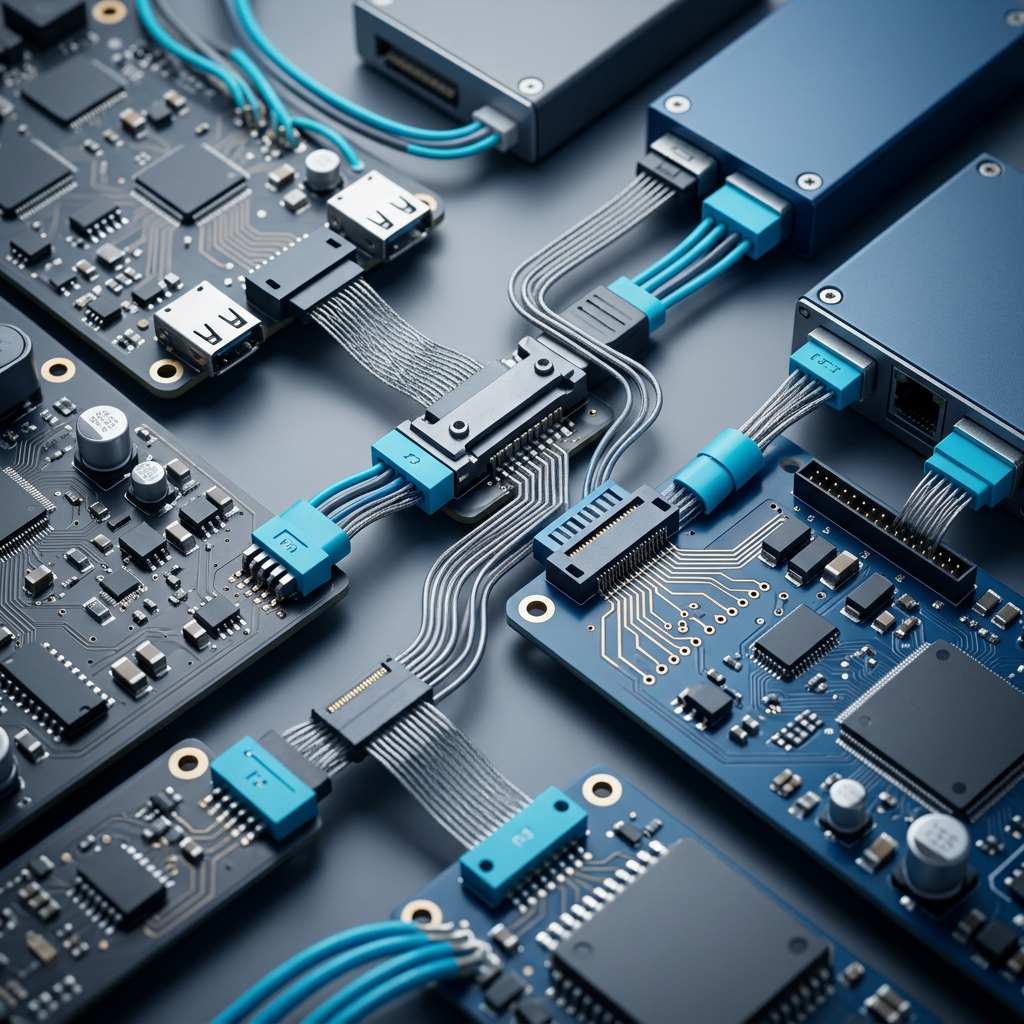
Before MCP, connecting five AI models to ten external tools required up to fifty separate integrations, each with its own authentication logic, data serialization, and error handling. The official MCP documentation describes this as the N×M problem, and it is precisely what the protocol eliminates. With MCP, each model implements one client and each tool implements one server. Five models and ten tools now require only fifteen total implementations instead of fifty. This is not a theoretical improvement. Engineering teams building agentic AI systems in production have reported significant reductions in integration timelines after adopting the protocol, with the official MCP documentation citing this as one of the protocol's primary design goals.
MCP Protocol vs REST APIs and Traditional Approaches#
Developers evaluating MCP often ask the same question: why not just use REST APIs? The answer is not that REST is broken, but that it was never designed for the specific requirements of large language models interacting with external systems in real time.
Where MCP Differs From Conventional API Patterns#
REST APIs require the developer to write explicit code for every integration: authentication, request formatting, response parsing, error recovery, and context assembly. The AI model itself has no awareness of what tools exist or how to use them. MCP flips this dynamic. Through the protocol's capability discovery mechanism, a model can query an MCP server to learn what tools and resources are available, what parameters they accept, and what data they return. This makes the model an active participant in orchestration rather than a passive text generator that relies on surrounding code to do the real work.
The table below highlights the core tradeoffs between MCP and traditional REST API integration for AI applications.
Dimension | Traditional REST APIs | MCP Protocol |
|---|---|---|
Discovery | Manual; developer must hardcode endpoints | Automatic; model queries available tools at runtime |
Integration Effort | Custom code per model-tool pair | One client + one server per participant |
Context Handling | Developer assembles context manually | Protocol optimizes context for model reasoning |
Interoperability | Limited to specific implementation | Any MCP-compliant model or tool |
Statefulness | Stateless by design | Persistent sessions with bidirectional communication |
The most significant difference is interoperability. A tool that implements an MCP server works with every MCP-compliant client without modification. REST integrations, by contrast, are locked to the specific application they were built for. For teams managing multiple AI models or planning to swap providers, this portability alone justifies adoption.
When REST Still Makes Sense#
MCP is not a wholesale replacement for REST. Simple, stateless data fetches where no AI reasoning is involved, such as pulling a stock price for a dashboard, do not benefit from the protocol's overhead. REST also remains the better choice for public-facing APIs consumed by non-AI clients. The protocol shines specifically in scenarios where a language model needs to dynamically discover, invoke, and chain together external capabilities. Teams should evaluate their architecture honestly. If the AI API pricing and integration costs already work within a REST setup and the system is not agentic, migration may not be urgent.
Adoption, Use Cases, and the Road Ahead#
MCP protocol adoption in the United States has accelerated sharply through 2025 and into 2026, driven by growing demand for standardized AI integration patterns that reduce duplicated engineering effort across organizations. The protocol is now supported natively in Claude, Cursor, Windsurf, and several other developer tools, with community-maintained servers numbering in the thousands.
Real-World Use Cases for Developers#
Model context protocol use cases span a wide range of production scenarios. Code editors use MCP servers to give AI assistants access to project files, documentation, and build systems without bespoke plugins. Customer support platforms connect language models to CRM databases, ticketing systems, and knowledge bases through a single protocol layer. Financial services teams use MCP to let models query compliance databases and generate reports with live data.
The pattern that unites these cases is tool chaining. Rather than a model performing a single lookup, MCP enables multi-step workflows where the model discovers available tools, sequences them logically, and passes context between steps. This is what separates a chatbot from a genuine AI agent, and it is where MCP implementation delivers its clearest value. As covered in TechBriefed's analysis of how frontier models work, MCP is the connective tissue making those capabilities operational in production environments.
Open Source Status and Ecosystem Growth#
The MCP protocol is fully open source, with its specification and reference implementations available under the MIT license on GitHub. This is not a proprietary lock-in play. While Anthropic introduced the protocol, governance is designed to be community-driven. Google, Microsoft, and multiple open source AI tool builders have contributed servers and client implementations. The ecosystem now includes official SDKs for TypeScript and Python, with community SDKs available for Rust, Go, and Java. For developers in the US building production systems, the open source foundation means no vendor dependency and full auditability of the protocol layer sitting between their models and data.
The MIT license also matters practically: it permits commercial use without royalty obligations, which removes a legal review step that would otherwise slow enterprise adoption. Developers evaluating MCP for regulated industries such as financial services or healthcare should confirm that the MIT license terms are compatible with their organization's open source policy before integrating any community-maintained server into a production pipeline. TechBriefed continues to track MCP's trajectory as one of the most consequential infrastructure shifts in the AI tooling landscape, and the protocol's community momentum suggests it will be a default integration pattern for new AI projects by late 2026.
Conclusion#
MCP model context protocol provides a standardized, open way for AI applications to communicate with external tools, data sources, and services without the engineering burden of custom integrations. For developers and technical founders evaluating their AI stack in 2026, understanding MCP is no longer optional; it is table stakes for building systems that can scale beyond a single model or a handful of hardcoded API calls. The protocol does not replace REST for every use case, but for agentic, multi-tool AI workflows, it eliminates the integration tax that has held teams back. Start by identifying one tool in your current stack that your AI application accesses through custom code, and explore whether an existing open source MCP server already covers it.
Frequently Asked Questions (FAQs)#
What is MCP model context protocol?#
MCP is an open standard introduced by Anthropic that defines a universal way for AI models to discover and interact with external tools, data sources, and services through a structured client-server interface.
How does MCP protocol work?#
MCP uses a host-client-server architecture where the AI application's client connects to MCP servers that expose tools, resources, and prompts through a standardized discovery and invocation mechanism.
Why use model context protocol instead of building custom integrations?#
MCP eliminates the N×M integration problem by requiring only one client per model and one server per tool, reducing engineering effort from dozens of bespoke connections to a handful of standardized ones.
How does MCP compare to REST APIs?#
REST APIs require manual endpoint coding and lack built-in tool discovery, while MCP lets models automatically discover available capabilities and maintain stateful, bidirectional sessions optimized for AI reasoning.
Is MCP protocol open source?#
Yes, MCP is fully open source under the MIT license, with its specification, reference implementations, and official SDKs for TypeScript and Python all publicly available on GitHub.
Can MCP protocol work with ChatGPT?#
OpenAI has added MCP support to its developer tools and APIs, meaning ChatGPT-based applications can connect to MCP servers, though the depth of native integration varies by product surface.
What problems does MCP solve for developers in the United States?#
MCP addresses the fragmented, time-consuming process of wiring AI models to enterprise tools and data sources, a challenge that US engineering teams building production agentic systems face at scale daily.
About the author