Humanoid Robots in 2026: The Startups, Investors, and Billions Behind Physical AI
A deep dive into the humanoid robotics landscape in 2026: the startups building them, the investors backing them, and the billions fueling physical AI's rise.
By Riley Cho · 9 min read ·
Introduction#
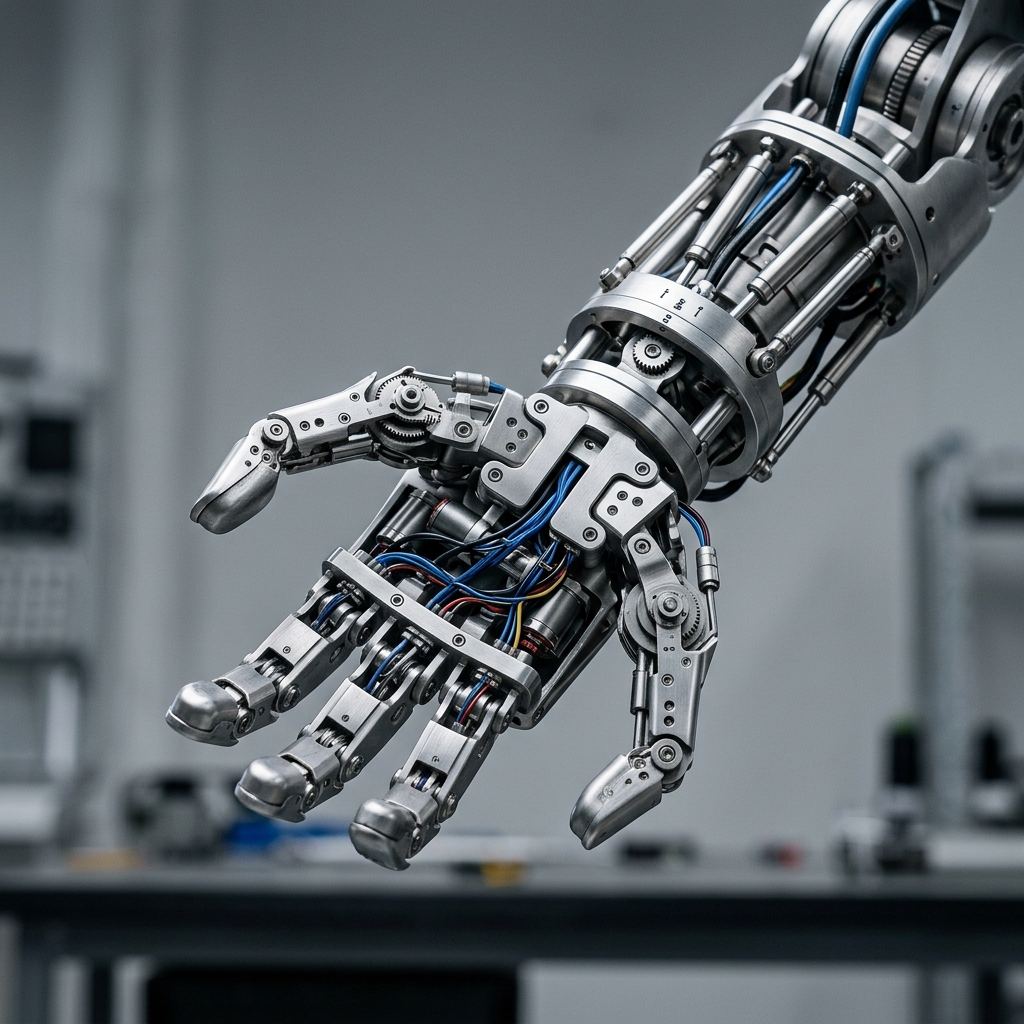
The humanoid robots market has crossed a threshold that separates research curiosity from serious commercial ambition. Humanoid robot startups, once a niche corner of academic robotics, are now the focal point of the largest deep-tech funding wave in a decade. Over the past 18 months, billions of venture dollars have poured into startups racing to build general-purpose physical AI systems that can work alongside humans in factories, warehouses, and logistics hubs.
The numbers are staggering, the corporate names are real, and the gap between what is funded and what is actually deployed is worth understanding clearly. For founders evaluating adjacent opportunities, VCs sizing up deep tech allocations, and engineers weighing career moves, the humanoid robotics landscape in 2026 demands a sharper lens than most headlines provide.
In short: humanoid robotics in 2026 is real, funded, and narrowly deployed but not yet general-purpose. The leading companies (Figure AI, Apptronik, Agility Robotics, Tesla Optimus) have raised over $1.5 billion combined, with commercial deployments limited to warehouse and automotive factory settings. Fully autonomous, adaptable humanoid robots remain three to five years away from mainstream use.
Who Is Funding Humanoid Robot Startups and How Much Have They Raised?#
Capital deployment tells you where conviction lives. In humanoid robotics, the conviction is loud, concentrated among a handful of mega-rounds and a growing tail of Series A and B bets from funds that historically avoided hardware. Understanding who is writing checks, and at what scale, reveals the investor thesis shaping this sector's trajectory.
The Biggest Rounds and the Names Behind Them#
The funding landscape for humanoid robot startups has reached a scale that would have seemed absurd five years ago. Apptronik raised $520 million in a round that valued the Austin-based company well north of $1 billion, signaling that investors see a credible path to commercial humanoid robots in industrial settings. Figure AI has pulled in over $750 million across multiple rounds, backed by names including Jeff Bezos, Microsoft, and NVIDIA. 1X Technologies, the Norwegian firm with deep ties to OpenAI, has secured north of $200 million. These are not speculative seed checks.
Figure AI: Over $750M raised, with strategic backing from Microsoft, NVIDIA, and Bezos Expeditions, focused on AI-driven warehouse and manufacturing deployments
Apptronik: $520M+ raised, partnered with Mercedes-Benz for factory floor pilots, based in Austin with deep NASA heritage
1X Technologies: $200M+ raised, OpenAI-backed, pursuing a consumer-adjacent long-term play alongside industrial contracts
Tesla Optimus: Internally funded with billions in R&D capital, leveraging Tesla's existing AI infrastructure and manufacturing scale
Agility Robotics: $200M+ raised, already shipping Digit units for warehouse applications with Amazon as a key partner
Why VCs Are Treating This Like the Next Platform Shift#
The investor thesis is straightforward but ambitious: if you believe that large language models cracked the digital intelligence layer, then embodied AI represents the physical intelligence layer and whoever controls it controls the next platform. Morgan Stanley has projected the humanoid robot market could reach $5 trillion by 2050, a number that gets VCs comfortable writing nine-figure checks today for optionality on that future. The shift in venture capital criteria in 2026 reflects this: funds that once avoided hardware entirely are now treating humanoid development as a software-first problem, where the robot body is the peripheral and the learned behavior model is the moat.
What Humanoid Robot Technology Actually Works in 2026?#
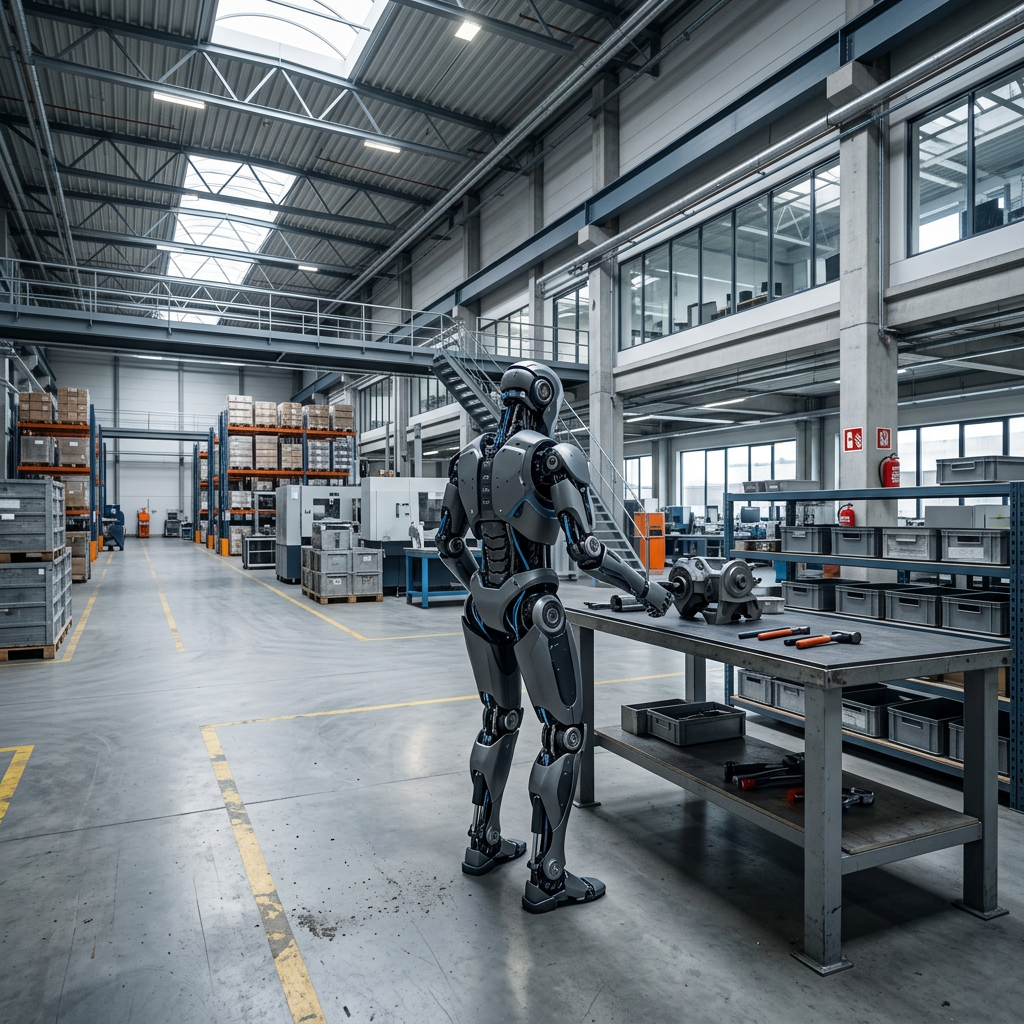
Funding rounds make headlines. Deployment realities do not. The gap between a polished demo reel and a robot that can reliably perform useful work in an unstructured environment for eight hours remains the central challenge. Evaluating top humanoid robot companies means separating polished demo reels from genuine dexterous capability.
Where the Hardware and Software Stand Today#
On the hardware side, the progress is real but uneven. Actuators are more compact and efficient than they were even two years ago, with companies like Apptronik and Figure AI developing custom electric actuator systems that deliver improved torque-to-weight ratios. Battery life remains a hard constraint. Most humanoid prototypes can operate for two to four hours of active movement before needing a charge or hot-swap, which limits the economic case in continuous production environments.
The software story is where things get more interesting, and more uncertain. The convergence of foundation models with robotics has created a new category of AI robotics research, where companies train manipulation and locomotion policies using massive simulation environments and then fine-tune on real-world data. Embodied AI, broadly defined, is the discipline of training robots to learn physical tasks through simulation and real-world interaction rather than hand-coded rule sets a fundamental departure from classical industrial robotics. This approach, broadly called embodied AI, is what differentiates the current generation from the hand-coded control systems of earlier humanoid efforts. But how VCs evaluate these AI startups still hinges on a critical question: can these learned behaviors generalize to novel tasks, or do they break down the moment the environment changes? The honest answer in 2026 is that generalization is improving but not yet reliable enough for fully autonomous deployment in most settings.
Commercial Deployments vs. Pilot Programs#
Agility Robotics has the clearest commercial traction among US humanoid robotics companies, with Digit units actively deployed in Amazon fulfillment centers for tote-moving tasks. These are narrow applications, but they are real, revenue-generating deployments. Warehouse applications that spare workers heavy lifting represent the most viable near-term use case because the environments are semi-structured, the tasks are repetitive, and the economic justification (reducing injury rates and addressing labor shortages) is immediate. Figure AI is running pilot programs with BMW, and Apptronik has its Mercedes-Benz partnership, but these remain pre-commercial in the sense that the robots are being tested and iterated on rather than purchased at scale. Tesla's Optimus program continues to advance internally, though external observers note its public demonstrations still rely heavily on teleoperation. The pattern across the industry is clear: commercial readiness in logistics and automotive leads healthcare, construction, and consumer settings by at least two to three years.
How Are Humanoid Robot Companies Differentiating in a Crowded Market?#
With this much capital flooding into a single category, differentiation matters. Not every humanoid robot startup will survive the transition from prototype to product, and the axes of competition are becoming clearer.
Technical Moats and Strategic Positioning#
The companies pulling ahead are the ones that control their own data flywheels. Tesla has a structural advantage here because Optimus can leverage the same neural network training infrastructure, data pipelines, and AI talent that powers Full Self-Driving. Figure AI is building its own data collection operations, reportedly running one of the largest humanoid robot data factories in the country. 1X Technologies leans heavily on its OpenAI relationship for foundational model access. This matters because the cost of collecting high-quality manipulation data in the real world is enormous, and companies that can generate and label this data at scale will train better policies faster.
On the business model side, some companies are pursuing a robots-as-a-service model to lower the barrier to adoption. Rather than selling a $100,000+ unit outright, they offer hourly or monthly rates that compete directly with temporary labor costs. Scaling this model requires manufacturing reliability that most startups have not yet demonstrated, but the unit economics on paper are compelling enough to sustain investor enthusiasm.
Where the United States Stands Globally#
Humanoid robotics in the United States benefits from the deepest AI talent pool, the most active venture ecosystem, and proximity to the large language model infrastructure that underpins modern robot learning. China, however, is closing the gap rapidly. Companies like Unitree, UBTECH, and Fourier Intelligence are iterating rapidly, often at lower hardware costs, and with strong government backing. The competitive dynamic mirrors what happened in electric vehicles: US companies lead on software sophistication, while Chinese competitors pressure pricing and manufacturing throughput. For readers tracking this space on TechBriefed, the geopolitical dimension of humanoid robot innovation adds another layer of complexity to funding decisions and supply chain strategy.
Conclusion#
Based on TechBriefed's analysis of funding disclosures, deployment announcements, and technology benchmarks through Q1 2026, the humanoid robotics sector has crossed from speculative to operational but only in narrow, well-defined use cases. The humanoid robotics sector in 2026 is real in a way it was not three years ago, backed by billions in committed capital, tangible (if narrow) commercial deployments, and a technology stack that is converging around learned behavior models rather than rigid programming. The honest assessment is that we are in the "useful but limited" phase: robots can move totes in warehouses and perform scripted tasks on factory floors, but the general-purpose humanoid that adapts to novel environments on the fly remains years away. For decision-makers, the actionable takeaway is to watch the data flywheel race, not the demo videos, because the companies that solve scalable real-world data collection will define the next generation of startups in this market.
TechBriefed's outlook: by 2028, the humanoid robot company landscape will consolidate around three to four enterprise-grade players in the US, with Agility Robotics and Figure AI the most likely survivors based on current deployment traction and data infrastructure and at least one Chinese competitor crossing into Western industrial supply chains.
Stay ahead of the biggest shifts in AI and deep tech by following TechBriefed at techbriefed.com for daily analysis that cuts through the noise.
Frequently Asked Questions (FAQs)#
What companies are making humanoid robots?#
The leading humanoid robot companies in 2026 include Figure AI, Apptronik, Agility Robotics, Tesla (Optimus), and 1X Technologies in the United States, and Unitree, UBTECH, and Fourier Intelligence in China. Among US companies, Agility Robotics has the most commercially advanced deployments, with Digit robots operating in Amazon fulfillment centers. Tesla's Optimus program remains the most heavily capitalized, funded internally through Tesla's AI and manufacturing infrastructure.
Why are companies investing in humanoids?#
Morgan Stanley projects the humanoid robot market could reach $5 trillion by 2050, a figure that makes billion-dollar bets today look like cheap optionality if the thesis holds. Investors see humanoid robotics as the physical layer of the AI platform shift: just as large language models digitized cognition, embodied AI robots are expected to digitize physical labor. This framing has drawn in venture funds that historically avoided hardware entirely.
How much do humanoid robots cost?#
Current commercial and pre-commercial humanoid units are estimated to cost between $50,000 and $150,000 per unit, though several companies are pursuing robots-as-a-service pricing to lower adoption barriers.
What is the difference between embodied AI and traditional robotics?#
Traditional robotics relies on hand-coded control systems for specific tasks, while embodied AI trains robots using foundation models and simulation environments so they can learn and adapt behaviors rather than follow fixed scripts.
Where are humanoid robots used in the United States?#
The primary deployment sites in the US are Amazon fulfillment centers (Agility Robotics' Digit) and automotive factory pilot programs with BMW and Mercedes-Benz, with logistics and warehousing representing the most commercially advanced use cases.
About the author