Frontier vs Open Source: Which AI Model Is Worth the Cost?
Frontier model API pricing vs open source AI: we break down the real costs for US startups and teams so you can decide which delivers better ROI.
By Riley Cho · 7 min read ·

Introduction#
Frontier model pricing has become the single most debated line item in every AI-forward company's budget. GPT-5, Claude 4.6, and Gemini Ultra now command per-token rates that can quietly scale a prototype's inference bill from hundreds to tens of thousands of dollars per month. Meanwhile, open source models like Llama 4 and Mistral Large have closed the capability gap fast enough to make self-hosting a genuinely viable alternative for production workloads. The real question is no longer which approach is technically possible; it is which one delivers more value per dollar when you account for every cost, visible and hidden, that hits your P&L.
Breaking Down Frontier AI Model Costs#
Frontier models are sold primarily through usage-based pricing, which means every API call carries a metered cost that compounds with scale. Understanding the full pricing picture requires looking beyond the rate card and into how those costs behave under real production traffic patterns.
What You Actually Pay Per Token#
The sticker price for Frontier AI inference pricing is straightforward on paper. OpenAI's GPT-5 currently charges around $10-15 per million input tokens and $30-60 per million output tokens at the standard tier, with Claude 4.6 and Gemini Ultra in a similar band. But those numbers obscure several multipliers that inflate the real bill.
Context window overhead: Longer prompts with system instructions and retrieval-augmented context can triple input token consumption per request
Retry and fallback logic: Production systems routinely retry failed or low-quality completions, adding 15-30% to raw token volume
Rate limit tiers: Frontier model pricing tiers often force companies to purchase higher capacity commitments to avoid throttling during peak hours
Output verbosity: Frontier models tend to produce longer, more detailed responses than necessary without careful prompt engineering, inflating output token spend
The Scaling Cliff Problem#
For a team running 10 million tokens per day, a frontier model API pricing bill can land between $8,000 and $25,000 monthly, depending on the model and output ratio. That number is manageable during early traction. The problem arrives at scale: a 10x increase in users does not produce a 10x increase in revenue for most SaaS products, but it does produce a roughly 10x increase in inference cost. According to analysis from a16z, this "LLMflation" dynamic has forced multiple startups to restructure their pricing models or absorb margin compression that investors find deeply uncomfortable.
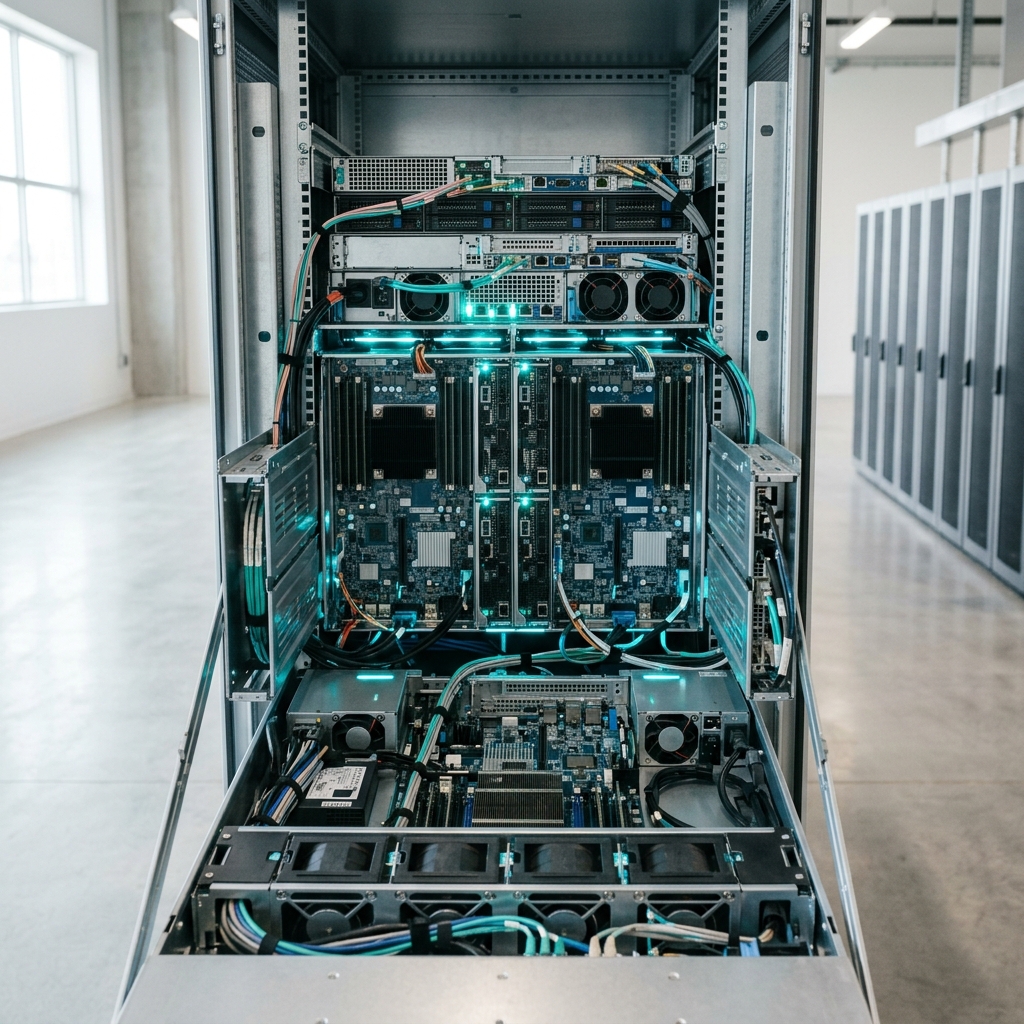
The True Cost of Self-Hosting Open Source Models#
Open source models eliminate the per-token meter, but they replace it with a different set of costs that most teams underestimate until they are deep into deployment. A fair frontier vs open source model pricing comparison requires accounting for infrastructure, talent, and ongoing operational burden.
Infrastructure and Compute Expenses#
Running a model like Llama 4 (70B+ parameters) at production-grade latency requires serious GPU hardware. A single NVIDIA A100 or H100 instance on a major cloud provider runs $2-4 per hour, and serving a 70B model with acceptable throughput typically demands at least 2-4 GPUs depending on quantization strategy. That translates to roughly $3,000-$9,000 per month in compute alone before you factor in networking, storage, and redundancy.
On-premise deployment shifts the cost profile to a large upfront capital expenditure. An H100-based server capable of hosting a production model runs $30,000-$50,000 or more. As total cost of ownership analyses have shown, on-prem breaks even with cloud hosting somewhere between 12 and 18 months of continuous use, making it a bet on sustained, predictable workload volume. Teams exploring the fine-tuning workflow for open source models need to budget additional GPU hours for training runs that can take days.
The Hidden Talent and Maintenance Tax#
The cost that rarely appears in open source TCO spreadsheets is the engineering time required to keep a self-hosted model running reliably. You need someone who understands model serving frameworks (vLLM, TGI, or TensorRT-LLM), GPU memory management, load balancing across inference nodes, and monitoring for output quality degradation. For US startups, a senior ML infrastructure engineer commands $180,000-$250,000 in total compensation. Even a fractional allocation of that role to model operations represents a high cost that frontier API users simply do not carry.
There is also the update cycle. When Meta or Mistral releases a new model version, migrating your AI infrastructure requires re-evaluation of hardware requirements, prompt compatibility testing, and potential re-tuning of any custom adapters. Frontier API providers absorb this complexity entirely. The question for every team is whether the savings on per-token costs justify absorbing that operational surface area, and for companies without dedicated ML ops talent, the answer is usually no.

Making the Decision: A Practical Cost Framework#
The right choice depends on three variables that interact differently at every company: monthly token volume, capability requirements, and team composition. Here is how to think through the calculus without falling for vendor marketing on either side.
Where Frontier APIs Win on ROI#
Frontier models deliver the best value for money in two specific scenarios. First, when your monthly inference volume stays below roughly 50 million tokens, the API cost (typically $500-$3,000/month) almost certainly undercuts the minimum viable self-hosting setup. The hidden costs of API pricing are real, but they pale in comparison to provisioning and maintaining GPU infrastructure at low volume.
Second, when your use case demands the absolute best reasoning capability, frontier models still hold a measurable edge on complex multi-step tasks, code generation with full-repository context, and nuanced content that requires deep world knowledge. The Claude 4.6 benchmark results and similar evaluations for GPT-5 show gaps that matter for high-stakes applications. If your product's core value depends on that last 5-10% of capability, paying the premium is a rational choice. TechBriefed has covered extensively how this capability gap is narrowing, but it has not closed.
Where Open Source Pulls Ahead#
The crossover point where self-hosting becomes financially compelling is lower than most people assume. At 100 million tokens per month and above, a well-optimized open source deployment on cloud GPUs typically costs 40-60% less than equivalent frontier API spend. According to inference price trend data from Epoch AI, the cost per token for self-hosted models has dropped faster than API prices, widening this gap throughout 2025 and into 2026.
Open source also wins decisively when data privacy, latency control, or customization are non-negotiable requirements. A self-hosted model can be fine-tuned on proprietary datasets without sending sensitive information to a third-party provider. For US-based startups in regulated industries like healthcare or fintech, this is not a nice-to-have; it is a compliance requirement that makes the infrastructure investment a cost of doing business, regardless of the per-token math.
Conclusion#
The frontier vs open source cost debate does not have a universal answer, but it does have a clear decision framework. If your team is small, your token volume is moderate, and you need peak capability now, frontier APIs remain the smarter investment. If you are scaling past 100 million tokens monthly, have ML infrastructure talent on staff, or need data sovereignty, open source self-hosting will deliver a stronger ROI calculation within months. The most common mistake TechBriefed sees teams make is treating this as a permanent, binary choice rather than a phased strategy where you start with APIs and migrate high-volume workloads to self-hosted models as economics dictate.
Get daily analysis on AI infrastructure costs, model comparisons, and startup strategy at TechBriefed.
Frequently Asked Questions (FAQs)#
How does the frontier model pricing compare to open source in the US?#
Frontier API costs typically run 2-5x higher per token than equivalent self-hosted open source deployments at scale, though open source requires upfront infrastructure and engineering investment that can offset savings at lower volumes.
What factors affect frontier model pricing?#
The primary factors are input versus output token ratios, context window length, rate limit tier selection, retry frequency, and whether you use standard or batch processing endpoints.
How do startups afford frontier models?#
Most startups manage costs through aggressive, prompt optimization, caching frequent responses, routing simpler queries to cheaper models, and leveraging startup credit programs offered by providers like OpenAI, Anthropic, and Google.
Which frontier model is the cheapest?#
Google's Gemini Flash variants currently offer the lowest per-token rates among frontier-class models, though they trade some reasoning depth for that price advantage compared to GPT-5 and Claude 4.6.
Is frontier model pricing worth it?#
Frontier pricing is worth it when your use case requires top-tier reasoning capabilities or when your monthly token volume is low enough that self-hosting infrastructure costs would exceed the API bill.
About the author