Digital Freight Marketplace vs Broker: Which Wins in 2026?
A head-to-head look at how digital freight marketplaces compare to traditional brokers heading into 2026.
By Riley Cho · 9 min read ·

Quick Answer
Digital freight marketplaces win for repeatable, data-rich freight workflows, while brokers remain necessary for exception-heavy moves that need human intervention. In 2026, the practical choice is not automation versus people, but whether a shipper can standardize enough of its procurement, dispatch, and visibility processes to benefit from software.
Introduction
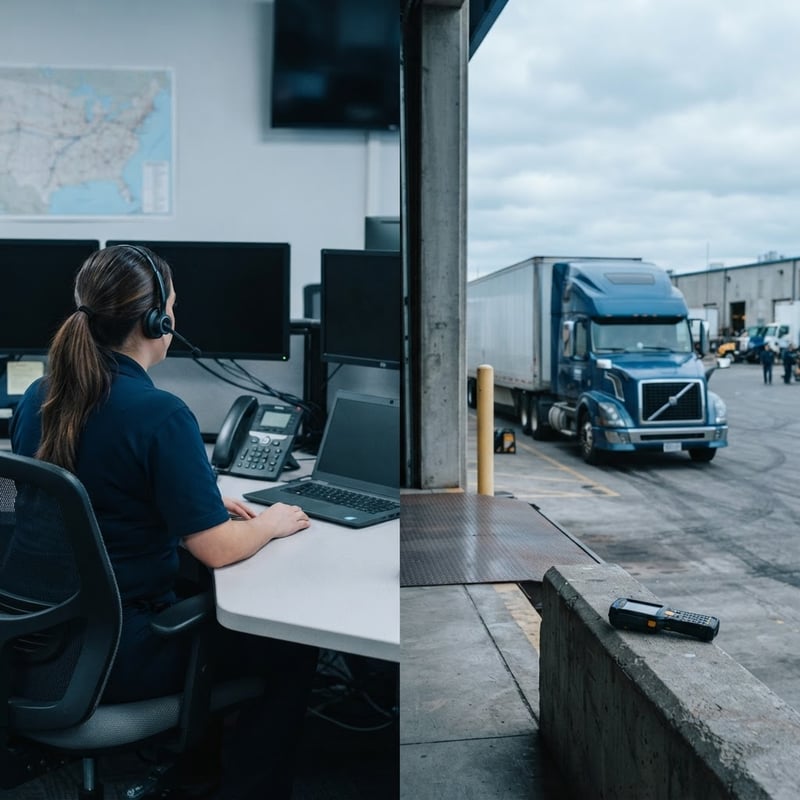
A digital freight marketplace turns freight buying into a software workflow: shippers post loads, carriers respond, and both parties work from shared shipment data. Traditional brokers still coordinate capacity and solve problems through relationships, calls, and operational judgment. The difference matters because automation can reduce handoffs, but it cannot remove the operational ambiguity created by unusual equipment, shifting pickup conditions, or a failed tender. The business value comes from deciding which work should be standardized and which still needs an accountable human operator.
Key Takeaways
Marketplaces create faster workflows when lanes, carrier requirements, and shipment data are standardized.
Brokers retain value when freight requires negotiation, recovery work, or specialized operational judgment.
Security, carrier vetting, and financial responsibility matter as much as a polished booking interface.
Digital Freight Marketplace Operations in 2026
A digital freight marketplace is a transaction layer that connects shippers and carriers through software rather than relying exclusively on a broker's manual coordination. The strongest systems centralize rate requests, tendering, documents, status events, and exceptions so teams can see the same operational record. That makes marketplace adoption an infrastructure decision, not simply a procurement experiment.
Where software changes the shipment workflow
The operational advantage is speed at the points where information can be structured, validated, and reused. A platform does not magically create carrier capacity, but it can make available capacity easier to find, compare, tender, and monitor when shipment details are clean.
Rate requests: Standard fields reduce repeated email and phone exchanges.
Carrier matching: Rules can filter capacity by equipment and lane requirements.
Digital tendering: Carriers receive actionable requests through connected workflows.
Shipment visibility: Status events support real-time freight tracking.[1]
Documentation: Shared records reduce disputes over shipment details, especially as more carriers adopt the digital bill of lading in place of paper paperwork.
What software cannot standardize
AI in freight management can prioritize options, flag anomalies, and route work to the right person, but it only performs as well as the data and operating rules behind it. A missed appointment, damaged load, carrier cancellation, or ambiguous accessorial charge still requires someone who can interpret context, negotiate a remedy, and own the next decision. The same limits apply to enterprise AI agent platforms more broadly: they can execute a defined workflow reliably, but they still need a human owner for judgment calls outside that workflow.

Digital Freight Marketplace vs Traditional Brokerage
Digital freight marketplaces and traditional brokerages are not a clean replacement story because the models organize accountability differently. A marketplace makes the transaction more visible and repeatable; a broker concentrates coordination inside a service team. Companies with predictable freight can move more work into software, while volatile networks should keep a human escalation path close to the shipment.
Compare the operating models before comparing interfaces
Cost transparency, speed, scalability, and security are useful criteria, but none should be evaluated in isolation. A quoted rate is only useful if the service definition is clear, and fast booking is only useful if the selected carrier can execute the load.
Criterion | Digital marketplace | Traditional broker | Decision implication |
|---|---|---|---|
Rate visibility | Structured quotes and transaction records | Quotes commonly managed through a representative | Useful for auditable procurement |
Booking speed | Automated matching and tender workflows | Human outreach and confirmation | Depends on lane standardization |
Exception handling | Rules, alerts, and support escalation | Direct operational coordination | Human judgment matters for complex failures |
System integration | APIs and cloud-based logistics software connections | Varies by broker and shipper process | Assess data ownership and workflow fit |
The table's central point is simple: the marketplace model improves workflow consistency, while brokerage can put more judgment into a messy shipment. Neither outcome guarantees lower total cost without disciplined carrier qualification, service definitions, and exception measurement.
The legal labels also matter. Regulators distinguish arrangements involving brokers, carriers, and shippers who are all party to the same brokered transaction, so a product's front-end experience does not itself determine its role in the transaction. Teams evaluating freight marketplace platforms should map who accepts the load, who contracts with each party, who handles claims, and who communicates during disruption.
Security and financial responsibility are non-negotiable
Security means more than user authentication. It includes carrier identity checks, access controls, audit trails, document retention, payment controls, and clear escalation ownership when shipment data conflicts with physical events, the same discipline that should inform any data breach response plan a freight-tech vendor keeps on file.[2] For United States freight brokerage, financial responsibility requirements require action when available security drops below $75,000 and is not replenished within 7 calendar days.[3]
That rule is a useful reminder for buyers: a clean user experience is not proof of operational resilience. Surety providers and financial institutions must notify FMCSA when the required minimum is breached and not timely restored. Procurement teams should check the legal entity, authority status, insurance and security arrangements, incident process, and the exact party responsible for payment and claims before routing material volume through a platform. A surety company or financial institution found in violation of 49 U.S.C. 13906 or § 387.307 faces a monetary penalty and a mandatory 3-year ineligibility period to provide broker or freight-forwarder financial security.
How to Choose Logistics Software Solutions
Choose logistics software solutions by starting with shipment patterns, not a feature checklist. A platform that looks efficient in a demo can create more work if it forces dispatchers to work around incomplete integrations, inconsistent carrier data, or unclear exception routing. The right implementation begins with a narrow lane set and clear success criteria.
Run a controlled operational evaluation
Test a marketplace on recurring lanes where equipment needs, appointment processes, and shipper requirements are already documented. Track tender acceptance, booking completion, status quality, exception frequency, manual touches, and the time required to resolve a disruption. Reviews of enterprise freight management software should also include finance and compliance stakeholders, often supported by dedicated freight audit software, because freight invoices, accessorials, and carrier payments expose gaps that a dispatch-only pilot can miss.
Ask vendors to demonstrate the actual workflow from quote through delivery, including late pickup, rejected tender, changed consignee instructions, and disputed charges. APIs matter only if they move the fields your transportation management system and finance stack need, without forcing staff to recreate information in a second place.
Use brokers deliberately, not by default
Traditional brokerage remains operationally relevant when freight is unusual, capacity is constrained, or a shipment needs persistent human coordination. The broker's role is most defensible when the task involves judgment that cannot be reduced to a fixed rule, such as sourcing specialized equipment, managing a multi-party disruption, or interpreting a customer-specific service issue.
For founders and investors watching supply chain technology, the key question is whether a company is building durable workflow ownership or merely a digital lead form. Technology analysis is useful for separating the interface layer from the underlying operational and regulatory burden, and the same scrutiny that AI compliance software gets from auditors applies just as well to a freight platform's own compliance claims.

What the 2026 Freight Tech Shift Actually Means
The shift toward automated freight brokerage platforms is real, but its limits are equally real. Software can compress administrative work, expose better data, and coordinate routine decisions across a larger network. It does not eliminate the need for capacity relationships, execution oversight, and recovery work when physical operations diverge from the plan.
Watch for workflow ownership, not AI theater
The most useful AI systems will improve a specific decision: identifying incomplete shipment data, predicting a missed milestone, prioritizing an exception queue, or suggesting a carrier match within defined constraints. Claims about autonomous dispatching should be tested against the company's ability to explain inputs, override a recommendation, and preserve an audit trail after a dispute.
In US logistics, technology trends will favor products that integrate cleanly with transportation, warehouse, finance, and customer-service systems. The defensible asset is not a chatbot attached to a load board; it is a trusted operating record that lets people and software coordinate the same shipment without losing accountability.
Build the selection framework around failure modes
Evaluate a platform by asking what happens when normal execution fails. Who notices first, who can contact the carrier, what data is retained, who approves additional charges, and who closes the issue with the customer? Those answers reveal more about a freight product than a marketplace's matching screen.
Across technology markets, durable software businesses usually win by owning high-frequency, consequential workflows rather than by adding automation to a superficial step. Freight technology is no exception because the real product is reliable execution under changing conditions.
Conclusion
Digital freight marketplaces are the better choice for shippers that can standardize lanes, data, tendering rules, and carrier requirements across recurring freight. Traditional brokers remain valuable where execution depends on negotiation, specialized knowledge, or active recovery during disruptions. Use a controlled pilot to measure workflow quality rather than relying on promised savings, then retain human accountability for the exceptions software cannot safely resolve. For technology leaders, concise analysis can clarify the operational implications behind freight-tech claims.
Need a sharper filter for logistics and software shifts? Follow TechBriefed for focused technology analysis.
Frequently Asked Questions (FAQs)
How do digital freight marketplaces work?
Digital freight marketplaces work by using software to collect shipment details, connect available carriers with loads, manage tendering, and maintain a shared record of status updates, documents, and transaction activity across the freight workflow.
What is the difference between traditional brokerage and digital marketplaces?
The difference is that traditional brokerage centers execution in human-led coordination, while digital marketplaces structure matching and workflow steps in software, though both models still need clear contractual responsibility and escalation processes.
Is a digital freight marketplace worth the investment?
A digital freight marketplace is worth the investment when a company has repeatable lanes, reliable shipment data, integration capacity, and enough transaction volume to reduce manual work without weakening exception management.
What is the best digital freight platform for businesses?
The best digital freight platform for a business is the one that fits its carrier network, shipment complexity, data architecture, compliance requirements, and exception process, rather than the one with the broadest automation claims.
Are digital freight platforms secure?
Digital freight platforms can be secure when they enforce identity verification, role-based access, audit trails, payment controls, and clear data-handling practices, but buyers must independently validate the operating entity and accountability model.
Can AI improve freight brokerage efficiency?
AI can improve freight brokerage efficiency by prioritizing work, detecting incomplete data, flagging likely delays, and recommending matches, but human operators must retain authority over exceptions, negotiations, and high-impact service decisions.
Sources
- Real-time freight tracking — truxweb.com ↩
- Carrier identity checks — truxweb.com ↩
- Broker and Freight Forwarder Financial Responsibility Rule Overview and Compliance Requirements — fmcsa.dot.gov ↩
About the author

 Digital Twin vs Simulation Software: Which Wins in 2026?
 Prompt Injection vs Jailbreaking: What Teams Must Know 2026
 AI Chips vs GPUs: Which Wins for AI Workloads in 2026?
 How to Split Your Budget Between AI Search Visibility and SEO
 Cloud LTL Freight Software: What Shippers Need